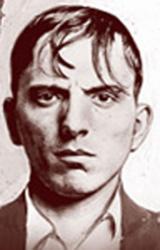
Vaino Myllyrinne
 Finland
- The Finnish Giant
- Early Life and Family
- Military Career and Civilian Life
- Entertainments and Travels
- Later Years and Legacy
The Finnish Giant
Record-Breaking HeightVäinö Myllyrinne stood as a true colossus among men. His height, measured at various points throughout his life, ranged from 246 to 251.4 centimeters (8 feet 1 inch to 8 feet 3 inches). The most commonly cited figure for his stature is 248 centimeters (8 feet 1.6 inches). Myllyrinne himself reported his height as 247 centimeters (8 feet 1.4 inches). Weighing over 170 kilograms (375 pounds), he continued to grow well into his 40s.
His immense physical presence made him a standout, even in a nation known for its tall population. Notably, he enlisted in the military in 1929 with a height already around 220 centimeters (7 feet 2.6 inches), making him likely the tallest soldier of all time.
Early Life and Family
Myllyrinne was born on February 27, 1909, in Helsinki, Finland. The second child of a police officer, he had eight siblings, two of whom died in infancy. His father hailed from the province of Satakunta, while his mother, Anna-Maria Keränen, came from the Kainuu region. Interestingly, his mother's home village of Paltamo in northern Finland was also the birthplace of two other Finnish giants: Daniel Kajanus and Lauri Moilanen.
Military Career and Civilian Life
In 1929, Myllyrinne began his military service in the heavy artillery division in Vyborg. Prior to the outbreak of World War II, he lived in various locations due to his family's frequent relocations. After his military discharge, he settled in Helsinki.
Entertainments and Travels
Myllyrinne joined the Helsinki Athletics Club and briefly pursued wrestling. In the 1930s, he embarked on a European tour, performing in circuses and variety shows initially as a wrestler and later as a simple human exhibit where he shook hands with spectators. He planned to tour America, but the outbreak of the Winter War forced his return to Finland. After the war, he performed a few times in Sweden but declined offers to travel to the United Kingdom due to declining health.
Later Years and Legacy
In 1946, Myllyrinne moved to Järvenpää, where he raised chickens for nearly a decade. He married Anna-Liisa Puistonen in 1942, but the childless union ended after two years. In his final days, he lived with his brother's family.
Myllyrinne suffered from severe joint pain that hindered his mobility. In addition, he developed diabetes late in life. Six months before his death, he fell and fractured his hip. Väinö Myllyrinne passed away on April 28, 1963, at the Institute of Radiation Therapy in Helsinki. He was laid to rest in Järvenpää. In 2004, he was ranked 12th in a poll of the Greatest Finns.