Valentin Bakul
- Early Life and Education
- Career in Engineering and Industry
- Research and Scientific Contributions
- Scientific and Technical Achievements
- Recognition and Legacy
Early Life and Education
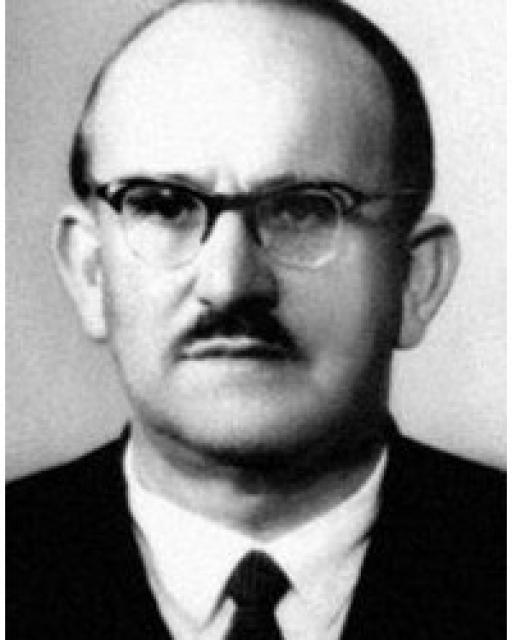
Viktor Nikolaevich Bakulwas born on August 11, 1908, in the village of Chernyshovka, Ukraine. His father, an army officer, passed away at an early age, leaving Viktor to work as a laborer on tobacco plantations from the age of 12.
He later attended a trade school and worked as a mechanic while studying part-time at the Kharkov Polytechnic Institute. In 1929, he was expelled due to his father's past as a tsarist officer. Undeterred, Viktor continued his education independently.
Career in Engineering and Industry
From 1929 to 1932, Bakul worked as a designer and later as a leading specialist at the All-Union Coal Industry Association "Ugol." In 1932, he presented his research on the application of hard alloys in the mining industry, gaining recognition and an invitation to a technical meeting in the Kremlin.
Until 1941, Bakul served as the head of a department at the Kharkov "Soyuztverdsplav" plant. During the Great Patriotic War, he evacuated with the plant to the Urals, where he managed the instrument production workshop. Upon returning to Kharkov in 1944, he became the chief designer and workshop manager of the plant renamed "Hydroprivod." In 1949, he was appointed head of the Kharkov branch of the All-Union "Tverdsplav" office.
Research and Scientific Contributions
Despite his extensive work experience, Bakul continued his education and graduated with honors from the Moscow All-Union Correspondence Polytechnic Institute in 1950. His research on the processing of construction stone formed the basis for his doctoral dissertation, which he successfully defended in Moscow in 1958.
In 1957, "Tverdsplav" was relocated to Kyiv and transformed into the Central Design Bureau (CKTB) for Hard Alloy and Diamond Tools. This marked the beginning of a 20-year period of exceptional creativity for Viktor Bakul.
Inspired by the scientific advancements in diamond synthesis at the Moscow Institute of High Pressure Physics, Bakul proposed establishing industrial production of synthetic diamonds in Kyiv in 1960. As the driving force behind this initiative, he oversaw the production of the first two thousand karats of synthetic diamonds in 1961 and the subsequent mass production of these materials to meet the country's growing demand.
Under Bakul's leadership, the Institute developed and refined technological processes for synthesizing various ultra-hard materials, studied their physical, chemical, and mechanical properties, and designed new high-pressure apparatuses and testing equipment. During his tenure, over 550 author's certificates for new developments, 132 foreign patents, and 26 international trademarks were obtained.
Scientific and Technical Achievements
The institute also fostered the development of new state standards and the training of numerous PhD and doctoral students. By 1977, the team had published over 1200 publications and organized conferences on synthetic diamonds attended by experts from over 30 countries.
Under Bakul's guidance, 23 doctoral and master's students successfully defended their dissertations. He personally published over 300 research papers and held 91 domestic and 148 foreign patents.
Recognition and Legacy
Viktor Bakul was a prominent member of the Communist Party of the Soviet Union and a candidate for membership in the Central Committee of the Communist Party of Ukraine. He passed away in Kyiv on June 5, 1978.
Bakul's innovative research and contributions to the advancement of hard alloy and diamond technologies have left a lasting impact on the scientific community and industrial practices worldwide. His pioneering work in the synthesis of synthetic diamonds remains a testament to his ingenuity and dedication to scientific progress.