Valentin Bondarenko
 Russia
- Early Life and Dreams of Space
- Training and Tragedy
- A Kind and Fearless Soul
- A Heroic Act
- A Tragic Accident
- A Tragic Loss and Legacy
Valentin Bondarenko: A Tragic Loss in the Early Days of Space Exploration
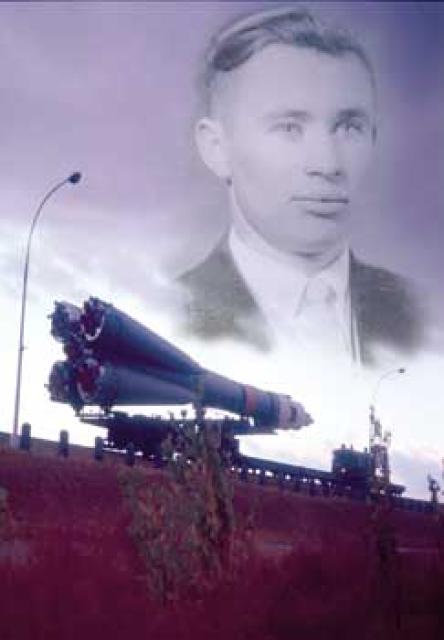
The flights of humans into space in the early 1960s were unprecedented in the history of mankind. However, this era of space exploration was not without its tragedies. The first space drama unfolded in our country, and Valentin Vasilyevich Bondarenko was the first on the sad list of those who embarked on the path to the stars but never reached their coveted goal.
Early Life and Dreams of Space
Valentin Bondarenko was born on February 16, 1937, and came from a humble background. His father, Vasily Grigoryevich, was the head of the tailoring workshop at the Kharkov Fur Factory before the war. He volunteered for the front in the early days of the war and earned seven military awards by the end of the war. Valentin survived two years of occupation with his mother and older brother. From childhood, the future astronaut dreamed of the sky. He was a talented teenager who excelled in his studies and showed a keen interest in aviation. In his later years of school, he joined the Kharkov Aero Club. In 1954, he graduated from school and entered the Voroshilovgrad Military Aviation School. In 1956, he was transferred to the Grozny School, and from there to the Armavir School, where he graduated in 1957, the same year the first artificial satellite of Earth was launched. In that year, Valentin got married, and his son Sasha was born. He then served in the Baltic States. Valentin Bondarenko was a talented pilot. His evaluation report states, "Hardworking. Loves flying, never tires of flights... Flies boldly, skillfully, confidently..." And most importantly, he wanted to continue learning how to fly. That is why, when the commission came to select candidates for the cosmonaut corps, Valentin was the first to be called for an interview. The first group of cosmonauts were born pilots. No one else was chosen or has been chosen since.
Training and Tragedy
On May 31, 1960, Valentin Bondarenko joined Military Unit No. 26266 in Moscow. Behind the five-digit number was the military town of Chkalovskiy, where the first twenty cosmonauts were trained. Today we call them the "Gagarin group." However, Valentin did not make it into the first group selected for the initial flights under the "Vostok" program, possibly because he was the youngest in the group. In the archives of the Gagarin Cosmonaut Training Center, among more than 20,000 documents and exhibits, there is only one cardboard folder that holds the memory of Valentin Bondarenko. It contains a photo from his personal file, a photograph of his grave, an autobiography written by his own hand, an excerpt from the examination records of the Armavir Military School, a diploma of completion of the school, an order book, moon maps with a crater named after him... Not so much, but not so little for a 24-year life.
A Kind and Fearless Soul
"Valya was a very good-natured and cheerful guy," recalls cosmonaut Pavel Romanovich Popovich. "He loved to joke and never got offended when teased. He sang beautifully, had a great voice and ear - beyond praise. We called him 'Zvonochek' (Little Bell). Every morning, he would run down the stairs from his apartment on the top floor and knock on all the doors, shouting, 'Time for exercise, time for exercise!' He played football excellently..." "No one could beat Valentin at table tennis," recalled Soviet cosmonaut Alexey Leonov. "He never got upset by friendly jokes. And when he was 'caught,' he laughed along with everyone else. If a person has a sense of humor and can take a joke about themselves, they are usually a kind person. He had courage and determination; he was not lacking in those qualities."
A Heroic Act
Valentin Bondarenko's comrades recalled an incident where a young boy climbed out onto a window ledge on the fifth floor and froze in fear. A crowd gathered below, trying to convince the child to go back inside, but he was too scared to move. Valentin Bondarenko reacted instantly: he climbed up the drainpipe to the fifth floor and rescued the child from the window ledge. "I still shudder when I remember how Valentin climbed up the drainpipe. At any moment, he could have fallen along with the pipe," recalled Soviet cosmonaut Georgy Shonin. But everything ended well that time. Valentin was greeted as a hero at the bottom, and he waved it off with a smile, saying, "It can be even tougher than this."
A Tragic Accident
However, Valentin Bondarenko had yet to face another challenge: the pressure chamber test, which assessed the nerves and health of future cosmonauts. According to the schedule at the Institute of Biomedical Problems, Valentin was supposed to begin the tests on March 13. That morning, he said goodbye to his wife Anya and mother, kissed his son, and told them he was leaving for a business trip of about 10-12 days.
Valentin had been in the "limited volume" training in the hypobaric chamber at the Institute of Aviation and Space Medicine in Moscow, near the "Dynamo" metro station, for ten days. He underwent the tests in an inverted day cycle – sleeping during the day and staying awake at night. The training in the "world of silence" was coming to an end. The pressure in the chamber was reduced, but compensated by a high concentration of oxygen. Valentin was allowed to remove the medical sensors from his body. He wiped his reddened skin with alcohol-soaked cotton wool and absentmindedly threw it into the trash. However, the cotton wool fell onto the electric stove coil. In the oxygen-enriched atmosphere, a fire quickly broke out in the small chamber. Valentin's wool training suit caught fire. He tried to extinguish the flames. The attending doctor couldn't immediately open the hermetically sealed door of the chamber due to the pressure difference. It took time to equalize the internal and external pressure...
When Valentin was brought out of the chamber, he was still conscious and kept repeating, "Don't blame anyone, it's my own fault."
After being evacuated from the pressure chamber, Valentin was immediately taken to the Botkin Hospital. The doctors fought for Valentin's life for eight hours. The researchers at the Institute of Aviation and Space Medicine offered their blood and skin for transplantation to save Valentin's life. However, unfortunately, they were powerless. He died from severe burns.
A Tragic Loss and Legacy
Thus, on March 23, 1961, 19 days before Yuri Gagarin's flight, Valentin Bondarenko tragically lost his life. He was the first casualty in the cosmonaut corps. His death made experts realize that there is no room for negligence in the field of space exploration. Since that fateful day, there have been no more tragic incidents during cosmonaut training.
"By a decree of the Presidium of the Supreme Soviet of the USSR dated June 17, 1961, Valentin V. Bondarenko was posthumously awarded the Order of the Red Star for the successful completion of government assignments." He was also posthumously given the title of cosmonaut. Even earlier, on April 15, 1961, a decree was issued stating, "To provide the family of Senior Lieutenant V.V. Bondarenko with everything necessary as the family of a cosmonaut." However, the memory of Valentin was short-lived in the corridors of power, as often happens.
Valentin Bondarenko was only 24 years old when he passed away. He was buried in Lipovaya Roscha Cemetery in Kharkov, where his parents lived. The standard inscription on the monument that stood over his grave read, "In Bright Memory from Friends-Pilots." It was only in the 1980s that the addition was made: " - Soviet Cosmonauts." Speculation surrounding his death continues to this day, largely due to the veil of strict secrecy.
"After my father's death, my mother and I lived in Zvezdny, near Star City, for a few more years before moving to our relatives in Kharkov," recalls Valentin's son, Alexander Valentinovich Bondarenko. "We thought life would be easier there. We gave up a two-room apartment here and received one of the same size in Kharkov. Did anyone help us? My mother received about a hundred rubles a month for my father's death until I turned sixteen. After that, no one remembered us..."


