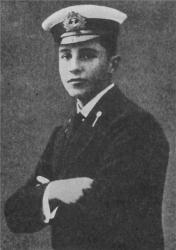
Valentin Varennikov
 Russia
- Valentin Varennikov: A Soviet General and Russian Politician
- World War II and the Berlin Campaign
- Post-War Career
- Senior Leadership Roles
- Later Career and Political Activity
- Legacy and Recognition
Valentin Varennikov: A Soviet General and Russian Politician
Early Life and Military CareerValentin Ivanovich Varennikov was born on December 15, 1923, in Krasnodar, Russia. His father, Ivan Evmenovich, was a Civil War veteran, while his mother, Maria Alekseevna, passed away when he was a child. Varennikov's interest in the military began early, and he joined the Cherkassy Military Infantry School in Sverdlovsk in August 1941.
After graduating as a lieutenant in October 1942, Varennikov was assigned to the Stalingrad Front. He fought valiantly as a platoon and battery commander during the 79-day siege of Stalingrad. Subsequently, he participated in the fierce battles for the liberation of Ukraine, distinguishing himself at Izum and other locations.
World War II and the Berlin Campaign
In 1943, Varennikov was promoted to deputy commander for artillery of the 100th Rifle Regiment, 35th Guards Rifle Division. In this role, he contributed to the crossing of the Dnieper River and the liberation of Right-Bank Ukraine, as well as the fierce fighting on the Dniester River.
As part of the famous Operation "Bagration," Varennikov's regiment participated in the breakthrough of enemy defenses west of Kovel and the liberation of southern Belarus from Nazi forces. In 1944, he entered Poland and fought for the capture of a bridgehead on the Vistula River. After being wounded, he returned to his regiment in January 1945 for the final offensive against Nazi Germany.
In the Berlin campaign, Varennikov's regiment played a crucial role in suppressing enemy defenses, storming the Seelow Heights, and ultimately advancing into the Reichstag building in Berlin. He and his men witnessed the historic Soviet Victory Banner being raised over the defeated Nazi capital on May 2, 1945.
Post-War Career
After World War II, Varennikov held various command positions in the 8th Guards Army in Germany. In 1950, he transferred to the Kiev Military District and in 1954 graduated from the M.V. Frunze Military Academy. Subsequently, he served in the Northern Military District for nearly 15 years, leading a variety of units, including the 54th Motor Rifle Division.
Varennikov distinguished himself as a highly effective commander, improving the performance of struggling units and earning recognition. In 1967, he graduated with honors from the General Staff Academy and returned to the Northern Military District as an army corps commander. Two years later, he was appointed commander of the 3rd Shock Army in the Group of Soviet Forces in Germany.
Senior Leadership Roles
In 1973, Varennikov became commander of the Carpathian Military District, which achieved high levels of readiness under his leadership. In 1977, he graduated from the Higher Academic Courses of the General Staff. In 1978, he was promoted to general of the army and became first deputy chief of the General Staff of the USSR Armed Forces.
Varennikov played a significant role in developing the Soviet military doctrine, operational art, and strategy, as well as overseeing the creation of new weapons. He also engaged in promoting military cooperation with friendly nations, serving in military missions to Syria, Angola, and Ethiopia.
Later Career and Political Activity
From 1984 to 1989, Varennikov led the Soviet military delegation in Afghanistan. He also played a key role in managing the aftermath of the Chernobyl disaster in 1986. Subsequently, he served as commander-in-chief of the Ground Forces and deputy minister of defense of the USSR from 1989 to 1991.
After the dissolution of the Soviet Union, Varennikov entered politics. He was elected to the Russian Parliament in 1995 and chaired the Committee on Veterans' Affairs. Varennikov also became a member of the Communist Party of the Russian Federation, serving as chairman of the board of the Russian Association of Heroes of the Soviet Union and Russia.
Legacy and Recognition
Valentin Varennikov was a highly respected and decorated military leader and politician. He was awarded the Hero of the Soviet Union for his services in Afghanistan and the Lenin Prize for his contributions to military innovation. His other awards included the Order of Lenin, the Order of the Red Banner, and the Order of Kutuzov.
General of the Army Varennikov passed away on May 12, 2009. He is remembered as a courageous and visionary commander who made significant contributions to the defense of the Soviet Union and the promotion of peace and security around the world.