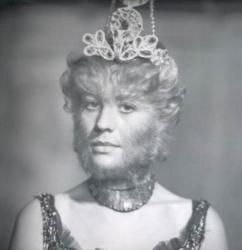
Varvara Radzivill
 Lithuania
Biography of Varvara Radziwill
Varvara Radziwill, a famous Lithuanian beauty and a Renaissance figure, was the wife of the Grand Duke of Lithuania and the King of Poland, Sigismund II Augustus. She was born into the powerful Radziwill family, with her brother being Nicholas Red Radziwill and her cousin being Nicholas Black Radziwill. In 1538 (according to other sources, May 18, 1537), she married Stanislaw, the son of influential Lithuanian magnate Albert Gashtold, the voivode of Novogrudok. However, she became a widow in 1542. In 1547, she secretly married the Grand Duke of Lithuania, Sigismund Augustus. The secret marriage was organized by Varvara's brothers, Nicholas Red and Nicholas Black. Shortly after the ceremony, the newlyweds were separated for six months, as the king went to the sejm in hopes of obtaining permission for the marriage, while Varvara was sent to Dubinki. Despite the distance, the couple maintained communication by exchanging letters and small gifts. Varvara's time in Dubinki left behind touching letters that showcased her education and wide range of interests. In 1548, Sigismund Augustus, who inherited the Polish throne after the death of Sigismund the Old, officially announced his marriage and demanded that Varvara Radziwill be recognized as the Polish queen. This was fiercely opposed by the king's mother, Bona Sforza, and Polish nobles who feared the influence of the Radziwill family. Only on May 7, 1550, in Krakow, was Varvara crowned, but she soon fell ill and passed away on May 8, 1551. Theories were proposed that she was poisoned by Bona.
Varvara's remains were transported from Krakow to Vilna accompanied by her grieving widower and were buried in the Cathedral. The romantic love story and the vibrant figure of Varvara Radziwill served as inspiration for several prose, poetry, and dramatic works in Polish and Lithuanian. According to one legend, the sorcerer Pan Twardowski summoned the ghost of her beloved at the request of the king. This story became the basis for a painting by Polish artist Wojciech Gerson, which is kept in the National Museum in Poznan. It was speculated that the miraculous image of Our Lady of Ostra Brama was actually a portrait of Varvara Radziwill.
Varvara Radziwill became the subject of dramas by Polish playwrights Franciszek Wenzyk (1811) and Alojzy Felinski (1823). In 1948, Jonas Grinius published the drama "Zygimantas Augustas ir Barbora Radvilaite." The plot was also used in the poetic drama "Barbora Radvilaite" (1971) by Lithuanian prose writer and playwright Juozas Grusas (staged at the Kaunas State Drama Theater in 1972, the Klaipeda Drama Theater in 1973, the Russian Drama Theater of Lithuania in 1980, and as a television play by Lithuanian Television in 1982). It is a unique version of Romeo and Juliet, portraying the legendary love story of the Polish-Lithuanian king Sigismund Augustus and the beautiful noblewoman and young widow Barbara Radziwill. The drama by Grusas revolves around the clash of powerful, romantic, ennobling love with the fanaticism of the state and the court of Queen Bona, the mother of Sigismund Augustus. Within the context of real historical circumstances, where the theme of Lithuania's historical destiny is present, the author includes the struggle of the characters for the principles of humanism, for their rights as individuals, and for the fullness of their lives.
Grusas was awarded the Republican Prize in 1976 for the drama "Barbora Radvilaite" as well as for his historical drama "Svitrigaila."