Vasiṣṭha
Vasiṣṭha is one of the most revered sages in Hindu tradition, remembered as a Vedic seer, royal priest and teacher of spiritual wisdom. His name connects some of India’s oldest sacred poetry with the epics and later philosophical literature. Across these works, he appears as both a figure of early ritual history and an ideal of patient insight.
A sage of the Vedic hymns
The Rigveda’s seventh book, or mandala, is traditionally associated with Vasiṣṭha and his family of poets. Its hymns praise deities such as Indra, Varuna and Agni, and reflect a world of ritual, kinship and competition among early Indo-Aryan communities. Vasiṣṭha is also linked to the hymn that describes the Battle of the Ten Kings, in which King Sudās and the Bharata people defeated a coalition of rivals. In that poetic account, the sage’s ritual support is presented as a source of the king’s success.
This connection places Vasiṣṭha at the meeting point of poetry and political authority. Vedic seers were not simply solitary mystics: they composed ritual poetry, served patrons and helped shape the religious life of their communities.
The royal teacher
Later Hindu epics and Puranic traditions give Vasiṣṭha a broader role. He is described as the family priest of the Ikṣvāku or Solar dynasty, serving kings such as Daśaratha and acting as a spiritual guide to Prince Rāma. These accounts portray him as a counselor whose wisdom helps rulers balance duty, justice and self-control.
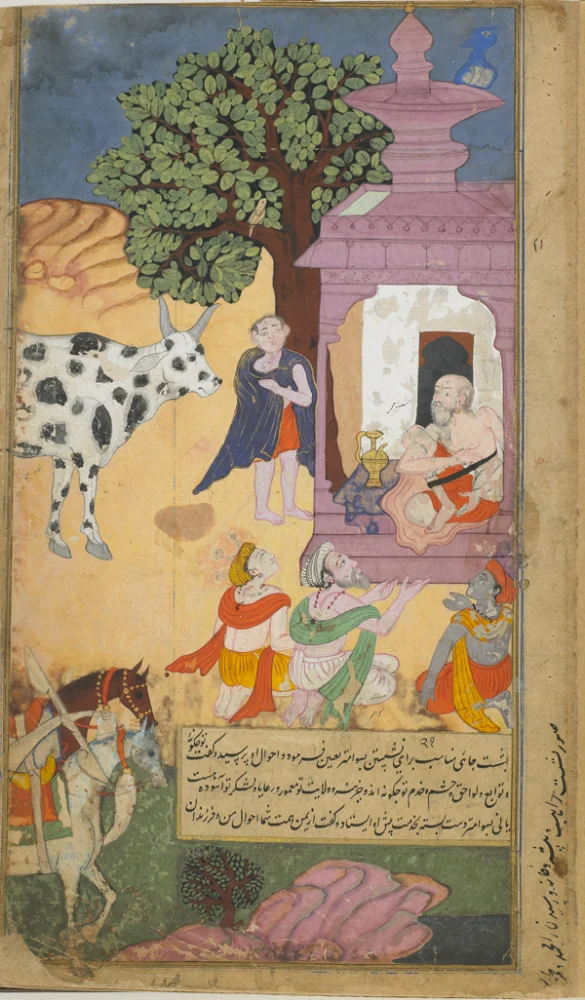
One of the most famous stories pairs him with the sage Viśvāmitra. Their rivalry, often told through the tale of Vasiṣṭha’s wish-fulfilling cow, explores the tension between spiritual authority and royal power. Viśvāmitra’s struggle to attain the status of a Brahmarṣi highlights Vasiṣṭha’s role as a model of disciplined knowledge.
Wisdom across generations
The name Vasiṣṭha is attached to several later works, including the Yoga Vāsiṣṭha, a philosophical dialogue framed as instruction to the young Rāma. The text explores the nature of mind, reality and liberation through stories and reflection. It developed many centuries after the Vedic period, and its traditional attribution should not be taken as proof that the ancient sage personally composed it.
Vasiṣṭha’s lasting influence comes from the way successive generations reshaped his image. In Vedic poetry he is a seer and ritual poet; in the epics he is a royal guide; in later philosophical traditions he becomes a teacher of liberation. Together, these portraits made him one of Hinduism’s enduring symbols of wisdom grounded in both spiritual insight and responsibility to society.