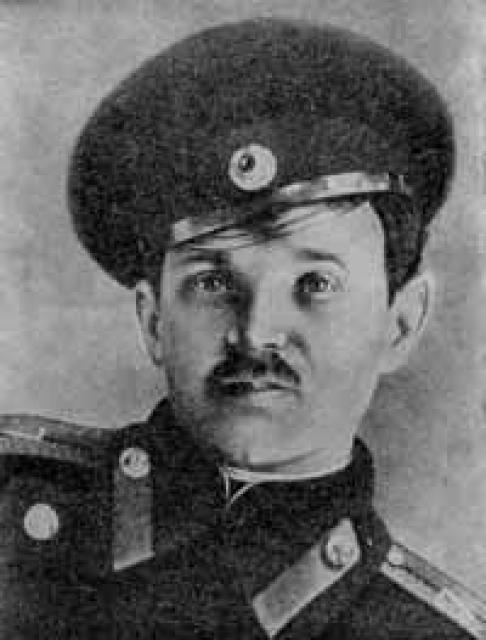
Vasiliy Agapkin
- Vasily Ivanovich Agapkin: A Renowned Military Conductor and Composer
- The Birth of "Farewell of Slavianka"
- World War I and Civil War
- Moscow and the "Golden Age"
- The November 1941 Parade
- The Post-War Years
- Suppression and Rehabilitation
- Legacy
Vasily Ivanovich Agapkin: A Renowned Military Conductor and Composer
Early Life and Military ServiceVasily Ivanovich Agapkin was born on February 3, 1884, in the village of Shancherovo, now part of the Ryazan region. In 1894, he joined a military orchestra as a regular musician and, in 1909, became an extended-service member.
The Birth of "Farewell of Slavianka"
In 1912, Agapkin composed the iconic march "Farewell of Slavianka," dedicated to Slavic women bidding farewell to their loved ones departing for war. The march premiered in 1913 in Tambov, where Agapkin had enrolled in the local music school in 1915.
World War I and Civil War
As a participant in World War I, Agapkin fought with distinction. During the Russian Civil War, he served in the 1st Red Hussar Warsaw Regiment. After the war, he was appointed military bandmaster of an orchestra in the Tambov garrison.
Moscow and the "Golden Age"
In 1922, Agapkin's orchestra won a military band competition in Moscow and was invited to join the Moscow garrison. There, he continued composing, particularly excelling in the genre of waltzes, including "Magic Dream," "Musician's Love," and "Blue Night." The orchestra under his direction became a fixture at parks and the Hermitage Garden.
The November 1941 Parade
Agapkin's finest hour came on November 7, 1941, during the Moscow military parade. As the combined military orchestra of the Moscow garrison, under his baton, bid farewell to the departing soldiers, history was made.
The Post-War Years
Despite being banned under Stalin, "Farewell of Slavianka" experienced a resurgence after the composer's death. It featured prominently in films and television programs, forever etched in the memory of the Soviet people and beyond.
Suppression and Rehabilitation
"Farewell of Slavianka" was not the only musical piece repressed by the Soviet regime. In 1927, a ban was imposed on works such as Mozart's "Requiem" and Wagner's operas. After the signing of the Ribbentrop-Molotov Pact in 1939, however, Wagner's music was rehabilitated, and his operas were staged at the Bolshoi Theater. The Soviet people flocked to concert halls to listen to once-forbidden "fascist music."
Legacy
Vasily Ivanovich Agapkin's enduring legacy lies in his profound impact on Russian military music. His most famous work, "Farewell of Slavianka," has become an iconic symbol of the sacrifices and resilience of the Soviet people during World War II. His contributions to the genre of waltzes continue to entertain and inspire audiences to this day.