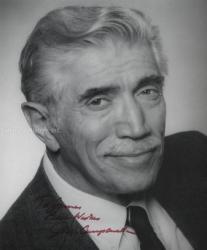
Vatslav Dvorzhetsky
 Russia
- Early Life and Arrests
- Exiled and Imprisoned
- Unbreakable Spirit
- Career in Theater
- Late-Blooming Star
- Moscow and Film Debut
- Legacy and Character
Early Life and Arrests
Born into a noble family in Kyiv on August 3, 1910, young Vaclav Dvortzhetsky excelled academically, simultaneously pursuing studies at the Kyiv Polish Drama Theater's theater studio (1927-1929) and the Kyiv Polytechnic Institute (1928-1930). However, his life took a dramatic turn when he was arrested at the tender age of 19.
He was held in labor camps from 1930 to 1937 for his involvement in the "GOL" (Group for the Liberation of the Individual). Despite the harsh conditions, Dvortzhetsky found solace in the camp's theater, "Tulomskaya Theatrical Expedition," where he made his theatrical debut.
Exiled and Imprisoned
Released in 1937, Dvortzhetsky faced exile in Omsk. There, he met and married ballerina Taisia Vladimirovna, and their son, Vladislav, was born a year later. Before the war, he worked as an actor and director in the Omsk Youth Theater, the Taganrog Drama Theater, and the Omsk Oblast Drama Theater. In 1941, he was arrested again and imprisoned for another 13 years.
Unbreakable Spirit
Through unimaginable hardships, Dvortzhetsky's spirit remained unyielding. He found escapism in his imagination, transforming the arduous task of digging ditches into the construction of a grand castle where he reigned as king. This imaginative play became a lifeline, helping him endure the horrors of the camps.
During his second imprisonment, he fathered a daughter, Tatyana, with a civilian employee. Upon his release in 1945, he returned to Omsk, but his marriage to Taisia had dissolved. However, she allowed Dvortzhetsky to maintain a relationship with their son.
Career in Theater
In Omsk, Dvortzhetsky worked at the Omsk Drama Theater, where he met Riva Yakovlevna Levite, a young directing graduate from GITIS. Despite threats from the party committee regarding Dvortzhetsky's past, they married in the early 1950s and moved to the Saratov Drama Theater. Their journey there was cut short when their son returned to Omsk to pursue a military education.
Late-Blooming Star
In 1960, Dvortzhetsky and Riva had a son, Evgeny, who would later become a renowned actor. Dvortzhetsky continued working in theaters across the provinces, earning acclaim in diverse roles, from Ivan the Terrible to eccentric elderly gentlemen. His remarkable career spanned 111 plays and 122 roles.
Moscow and Film Debut
Despite offers to work in Moscow, Dvortzhetsky maintained that he created his own capital wherever he performed. However, in 1978, he joined the Moscow Sovremennik Theater, but soon returned to the provinces.
At the age of 56, Dvortzhetsky made his film debut as the German officer Lansdorf in Alov and Naumov's "Shield and Sword." His exceptional talent shone in numerous films, including "Red and Black," "Father Sergius," "Petrovka 38," "Letters of a Dead Man," and "Forgotten Melody for Flute."
Legacy and Character
Vaclav Dvortzhetsky's unwavering spirit, infectious energy, and compassionate nature left an indelible mark on his colleagues and audiences. He lived a life of resilience and creativity, reminding others of the indomitable human spirit even in the face of adversity.