Veniamin Basner
 Russia
- The Composer of the People
- Roots and Musical Awakening
- Involvement with Jewish Culture.
- Military Service and the Turn Towards Composition
- Army Band and the Birth of a Composer
- Music and War
- His Method
- Film Music and the Birth of a Songwriter
The Composer of the People
In the Soviet Union, there were songs that seemed like genuine folk tunes, completely divorced from their creators. "Where Does the Motherland Begin?", "On the Nameless Height," "Birch Sap," "Fragrant Bunches of White Acacia," and "It Was Recently, It Was Long Ago"—generations of our compatriots grew up on these extraordinarily heartfelt and optimistic melodies. But how many of them remember who wrote them?
Veniamin Basnerhimself said, "Many people thought that 'On the Nameless Height' was a frontline song. One woman, all wounded, in a rest home in Kislovodsk, tried to convince me that they sang it on the front lines. She was very upset and didn't believe me when I tried to explain that I composed it in 1962."
Another amusing episode is connected to this song. Once, Basner told Vasily Solovyev-Sedoy about what had happened to him and his co-author, poet Mikhail Matusovsky. "Misha and I were standing at a taxi stand in Moscow, waiting for a car. After about half an hour, one drives up. But just as we were about to get in, three heavily intoxicated men appear out of nowhere. They push us away—'Get the f... out of here, you Jewish mugs,' they say. They get in the car and then, all of a sudden, belt out: 'Only three of us remained out of eighteen guys!' It was our song from the movie 'Silence' that had just come out." After hearing his story, Solovyev-Sedoy declared, "Well, Venya, now you can truly be called a people's composer."
Roots and Musical Awakening
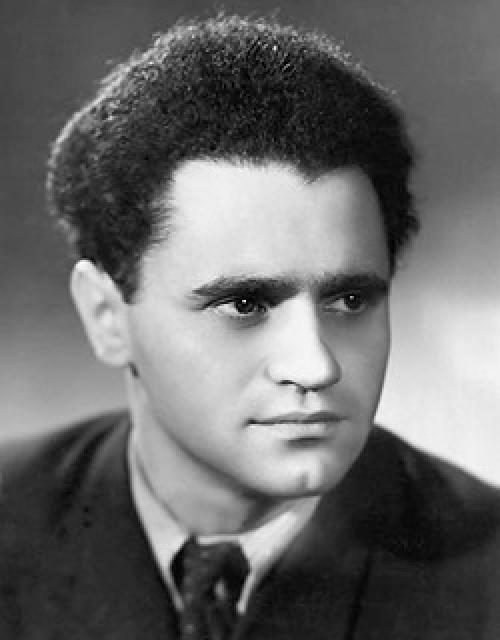
Early Life and MUSICAL Training.From a young age, the future composer was raised in the Jewish tradition. His parents had evacuated from Dvinsk to Yaroslavl during World War I, where Venyamin Basner was born on New Year's Eve in 1925. Both of his grandfathers and his parents, despite the assimilation of Jews in the Soviet Union, spoke Yiddish. Music was in the family blood. Both his grandfather and father, who were tailors, loved to sing Jewish songs while working. A photograph survives of Venyamin at three years old, holding a toy violin. "My mother recalled that I saw it in a shop window and didn't want to leave until we bought it. That's how I chose my destiny."
He went on to study violin at the Yaroslavl Music School named after Sobinov, then music college, and finally the Leningrad Conservatory, where he graduated in 1949, also in violin.
Involvement with Jewish Culture.
In his later years, Basner was actively involved in the creation of a Jewish music theater in St. Petersburg, the first of its kind in the city's three-century history. He served as its artistic director. "I am a Russian composer, Jewish by nationality," Basner said. "I was born in central Russia, and all my life I've absorbed Russian culture. My views were shaped by Russian literature and philosophy. But the fate of the art of the Jewish people, especially music, has always concerned me."
Military Service and the Turn Towards Composition
In February 1943, the 18-year-old Basner was drafted into the army. He ended up in a Kostroma artillery school. He studied well and dreamed of becoming an officer. However, fate had other plans. After hearing the young cadet play the violin, the head of the school, General Stenyagin, ordered: "We'll defeat the Germans without you—to the music platoon."
Army Band and the Birth of a Composer
"There, they immediately 'took me under their wing'. I arranged popular pieces and songs for our orchestras—the staff band and the self-organized amateur band—worked with the musicians, and participated in concerts. At the suggestion of the head of the school, we even staged the last scene from 'Eugene Onegin'. Imagine that: the war is going on, cannons are still roaring, and future artillery officers are learning parts from Tchaikovsky's opera! Decades have passed, and the names of those who participated in that production have been forgotten. But when I hear people talk about excesses in our musical world today, I remember with reverence the man who inspired the cadets to take on such a difficult task! We could use more commanders like that today, especially where future officers are trained. Our young cadres, infected with this passion for real, high-quality music, would carry it with them to their units and divisions. How much good that would do!"
Music and War
Although Basner never became an officer, one of the main themes of his work is the army, heroism, and the defense of the Motherland.
"I was not in Leningrad during the blockade, but when I arrived in this great city in 1944, I saw the ruined quarters and the Leningraders who survived the blockade—exhausted but unbroken, full of unyielding faith in Victory and in the fact that their city would rise from the ruins with their own hands, becoming even more beautiful. After all, I also started writing music in Leningrad. Perhaps everything I saw and my interactions with those who defended and restored the former beauty of our Northern Palmyra left an indelible mark on my soul, stirring certain strings within it."
His Method
His songs almost always hit the mark. Here's a small example: the premiere of "Birch Sap" took place at one of the concerts Basner gave to Soviet troops stationed in Germany. The final chords had barely faded away when the hall erupted in thunderous applause! He had to perform the song again and again until the audience had memorized it.
"There has to be an electric charge in the song," Basner believed. "The event or person you're going to write about must inspire you, ignite you. Another essential requirement that I personally make for a good song is sincerity and simplicity. In a symphonic piece, you can 'fall short' somewhere, even play a false note, and then reinforce another part, but that won't work in a song."
Film Music and the Birth of a Songwriter
Film Music Career.Venjamin Basner wrote the music for over a hundred films. How did a professional violinist end up in the movies?
"Immediately after the war, a decision was made to spread our propaganda to the 'people's democracies' that were being forged into the 'socialist camp'. And it was necessary to dub the best Soviet films into different languages: 'The Deputy of the Baltic Sea', 'Maxim's Youth', and several others for which the young Dmitri Shostakovich had written the music in the 1930s. Dubbing and recording the text was relatively easy, but what about the music? It often played in the background, under the words, which meant it needed to be superimposed—in other words, re-recorded. There was no playback equipment, aside from a projector, no tape recorders, and no surviving scores. Shostakovich himself was busy at the time—and he never returned to what he had written—and he refused to restore the music. So I remember sitting in the 'Lenfilm' studio with Oleg Karavaichuk, playing sections of the film over and over again, and quickly writing down the score as I heard it. It was very tiring work, always under pressure, having to listen to barely audible music. At the time, I was still a second-year student, not even in the composition department, but in the orchestral department. But when I finished everything and the orchestra played the resulting score, the orchestra members even gave me a round of applause. And Shostakovich later told me that I had heard and recorded everything accurately.
I was invited to this first film project—which was still not independent work—by the composer Avraham Askenazy. He got the official job, while Karavaichuk and I were hired as "ghosts". But the work was interesting and useful for me, and the pay was good—especially for students.
Later, on Shostakovich's recommendation, I got a job at 'Mosfilm' where I did my first pictures: 'Immortal Garrison' and 'Leningrad Symphony'. These films were directed by the renowned Zakhar Agranenko. But at that time, I only wrote instrumental music, symphonic music. I didn't write songs and thought I never would.
Later, I worked with Vasily Ordynsky. Vladimir Basov finished his 'Battle of the Way' after Ordynsky passed away during filming.
Vasily Ordynsky was the one who really "turned" me towards songwriting. In his film 'A Man Was Born', there's a scene where a mother is cradling her baby. A lullaby was needed. The wonderful poet Volodya Popov wrote the lyrics—simple but very touching. And I started to compose a melody for them in the same way I would for my instrumental pieces: thematically developing, varying, working with the intonation.
Finally, I finished it and brought it to Ordynsky. He listened to it and said, "No child will fall asleep to a melody like that. Don't you remember how your mother sang to you when you were a baby?" And then I started to remember my mother, and something warm came over me—and the melody flowed out all at once... "Wonderful, that's just what we need," said Ordynsky. "Recording tomorrow."—"Who's going to sing it?"—"You'll see, a singer will be here in an hour" (all this was taking