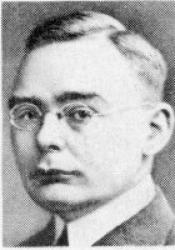
Venkata Raman
 India
India- Early Life and Education
- Civil Service and Scientific Research
- Discovery of the Raman Effect
- Nobel Prize and Recognition
- Later Career
- Legacy
Early Life and Education
Chandrasekhara Venkata Raman was born on November 7, 1888, in Tiruchirappalli, India, to Chandrasekhara Iyer, a mathematics and physics professor, and Parvathi Ammal. From 1901 to 1906, Raman attended Mrs. A.V.N.'s College in Visakhapatnam. He then moved to Madras Christian College, graduating in 1904 at the age of 16, with a gold medal for topping in physics.
Raman continued his studies at the Presidency College of the University of Madras, where he received his Master of Arts degree with first-class honors in 1907. Despite his passion for physics, his health prevented him from pursuing further education in Europe.
Civil Service and Scientific Research
In 1907, Raman joined the Indian Civil Service, serving in the Finance Department for ten years. Concurrently, he conducted experimental and theoretical research on stringed instruments and Indian drums, publishing around thirty papers by 1917. His work earned him recognition in scientific circles, and in 1917, he was appointed Professor of Physics at the newly created University College of Science in Calcutta.
Discovery of the Raman Effect
Under Raman's leadership, the University College of Science became renowned for its research in physics. In 1921, Raman visited Europe for the first time, where he observed the deep blue color of the Mediterranean Sea. Upon his return to India, he theorized that the color of the sea was due to the scattering of light by water molecules, similar to the scattering of light by air molecules that caused the blue sky.
Raman's observations sparked seven years of research into the scattering of light by molecules in liquids, solids, and gases. In 1928, together with K.S. Krishnan, Raman published a paper in the "Indian Journal of Physics" showing that scattered light contained additional radiation with different wavelengths, known as the Raman effect. This discovery became a powerful tool for studying molecular structure.
Nobel Prize and Recognition
In 1930, Raman was awarded the Nobel Prize in Physics "for his work on the scattering of light and for the discovery of the effect named after him." His work opened doors for deeper understanding of the structure of matter. Raman also received the Hughes Medal from the Royal Society of London and the Franklin Medal from the Franklin Institute.
Later Career
In 1933, Raman became the Director of the Indian Institute of Science in Bangalore. He continued his research on the Raman effect and initiated crystallographic studies on diamonds. He also investigated the interaction of atoms in crystals with light and sound.
After retiring in 1948, Raman established the Raman Research Institute, where he conducted further research in optics, crystal structure, and plant biology. He continued his scientific work until his death on November 21, 1970, in Bangalore at the age of 82.
Legacy
Chandrasekhara Venkata Raman was a brilliant physicist and a pioneer in the field of optics. His discovery of the Raman effect transformed the study of molecular structure and earned him international acclaim. As an educator and a cultural icon, Raman played a vital role in promoting science in India. His legacy continues to inspire generations of scientists.