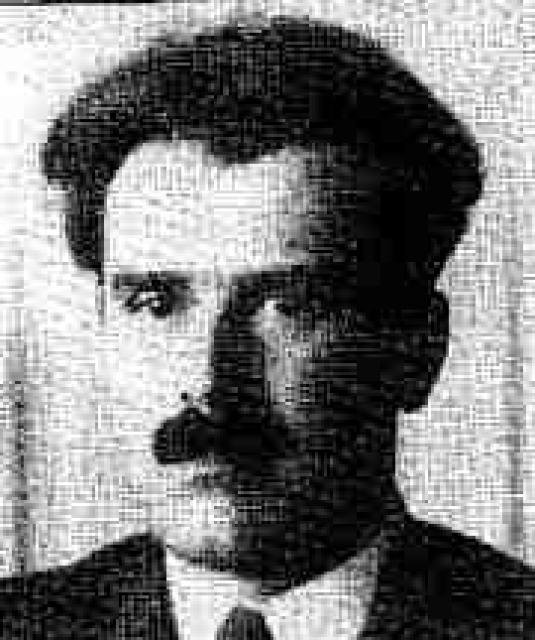
Vergil Dimov
 Bulgaria
- Early Life and Education
- Political Activism
- Return to Bulgaria and Career
- Opposition to the Government
- Brief Ministerial Position and Imprisonment
- Later Years
Early Life and Education
Dimiter Dimitrov was born to refugee parents from the Aegean region of Thrace. Despite being expelled from school in Shumen, he completed his secondary education in Popovo and then pursued his studies at Sofia University.
Political Activism
In 1920, Dimitrov joined the Bulgarian Agrarian National Union (BZNS). From 1923 to 1924, he served as secretary of the Agrarian Youth Union and editor of the "Youth Agrarian Banner" newspaper. Due to political persecution, he was forced to emigrate to Yugoslavia and then Czechoslovakia, where he graduated from the Prague Cooperative School in 1926.
Return to Bulgaria and Career
After an amnesty was declared, Dimitrov returned to Bulgaria in 1926. He completed his law degree from Sofia University in 1929 and practiced as a lawyer. He held prominent positions within the right-wing BZNS "Vrabcha-1": chief organizer from 1926 to 1931 and secretary from 1931 to 1932.
In 1931, he was elected as a deputy to the 23rd National Assembly. From 1932 to 1934, he served as Minister of Public Works, Roads, and Public Utilities in the government of Nikola Mushanov.
Opposition to the Government
After the 1934 coup d'état that overthrew Mushanov's government, Dimitrov became a leading figure in the opposition movement. He advocated for the restoration of the Tarnovo Constitution and opposed the Fatherland Front, which was heavily influenced by communists. In August 1944, he signed the "Manifesto of 13" opposition figures urging Bulgaria to withdraw from World War II.
Brief Ministerial Position and Imprisonment
During the brief cabinet of Konstantin Muraviev in 1944, Dimitrov held the positions of Minister of Internal Affairs, Public Health, Railways, Posts, and Telegraphs. After the September 9 coup later that year, he was arrested. In 1945, he was sentenced to life imprisonment by the "People's Court," which held him responsible for the clashes between communist demonstrators and police in Sofia on September 6-7, 1944. The verdict was overturned by the Supreme Court in 1996.
Later Years
Dimitrov was released from prison in 1955 after agreeing to cooperate politically with the communist regime. In 1957, he became a member of the Supreme Council of the BZNS, an officially recognized party that accepted communist dominance. He published his memoirs of his time in prison in 1990.