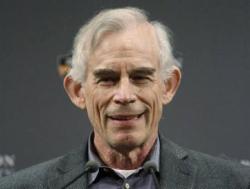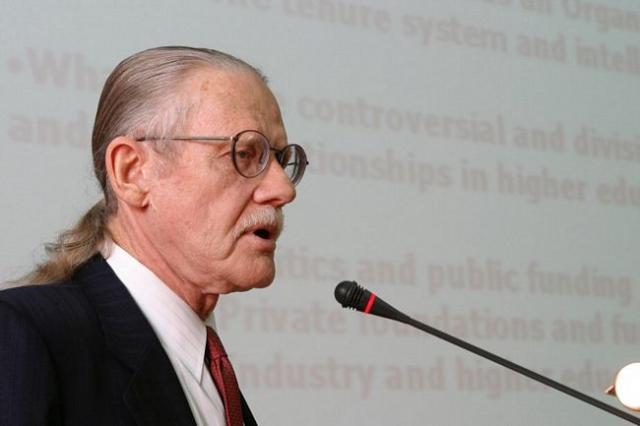
Vernon Lomax Smith
 USA
USABiography of Vernon Lomax Smith
Vernon Lomax Smith was an American economist and professor. Born on January 1, 1927, in Wichita, Kansas, he attended Wichita North High School and Friends University. Smith received his bachelor's degree in electrical engineering from the California Institute of Technology in 1949, his master's degree in economics from the University of Kansas in 1952, and his Ph.D. in economics from Harvard University in 1955.
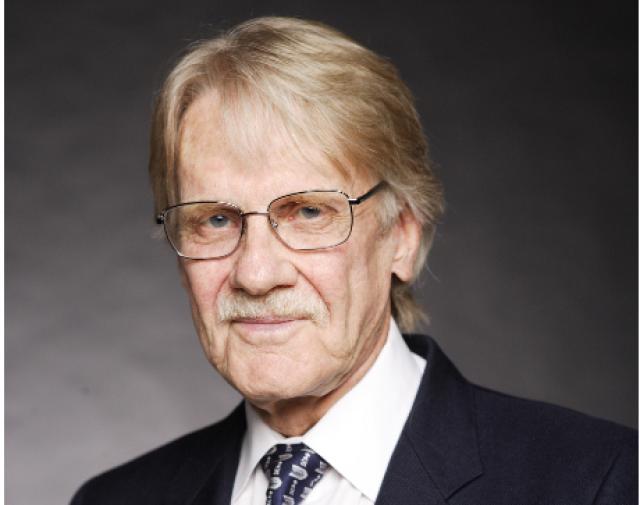
Early Career
Smith began his teaching career at the Krannert School of Management at Purdue University in 1955. During his time there, he became interested in experimental economics and conducted market experiments to help students understand microeconomic theory. In 1961-1962, he was a visiting professor at Stanford University, where he met Sidney Siegel, a fellow enthusiast of experimental economics.
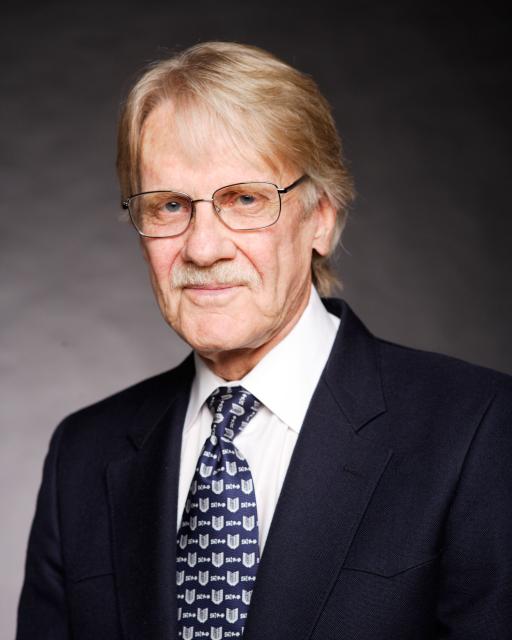
Later Career
Smith moved to Massachusetts in 1967, where he taught at Brown University until 1968 and then at the University of Massachusetts until 1972. During this time, he also worked at the Center for Advanced Study in the Behavioral Sciences and the California Institute of Technology. In collaboration with Charlie Plott, Smith formalized the methodology of experimental economics. In 1976, his work "Experimental Economics: Induced Value Theory" was published in the American Economic Review, marking one of the first attempts to articulate the principles of experimental economics.
Contributions and Achievements
Smith's significant research, which contributed to his Nobel Prize, was conducted at the University of Arizona between 1976 and 2002. His work focused on the theory of capital, finance, natural resource economics, and experimental economics. He co-authored approximately 200 scientific articles and books on these subjects. In 1982, Smith, along with Stephen J. Rassenti and Robert L. Bulfin, pioneered the practice of combinatorial auctions.
In 2002, Smith was awarded the Nobel Prize in Economics jointly with Daniel Kahneman. He received this prestigious honor for his groundbreaking contributions to experimental economics. In 2008, Smith founded the Economic Science Institute at Chapman University.
Personal Life
In February 2005, Smith publicly announced that he had Asperger's syndrome, a mild form of autism. Despite this, he continued his influential work and remains a respected figure in the field of economics.