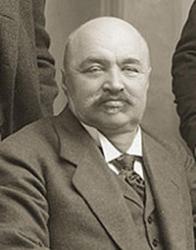
Victor Amadeus II
 Italy
Italy- Victor Amadeus II, King of Savoy
- Reign
- Enlightened Absolutism
- War of the Austrian Succession
- Later Years
- Legacy
- Personal Life and Family
Victor Amadeus II, King of Savoy
Victor Amadeus II (14 May 1666 – 31 October 1732) was the 17th Duke of Savoy from 1675 to 1730, the 13th Duke of Montferrat from 1713, the 15th Prince of Piedmont, and the 17th Grand Master of the Supreme Order of the Most Holy Annunciation from 1675. He inherited the throne of the Duchy of Savoy at the age of nine and later became the first sovereign of the House of Savoy to hold the title of King of Sardinia.
Contemporaries dubbed him the "Savoyard Fox" for his diplomatic skills. He successfully defended the sovereignty of the Duchy of Savoy and the Principality of Piedmont from French encroachment. After the War of the Spanish Succession, he acquired the Duchy of Montferrat and other territories, as well as the Kingdom of Sicily, which he later exchanged for the Kingdom of Sardinia.
Reign
Victor Amadeus II initiated reforms in state administration, the army, the navy, the tax system, and education. These reforms laid the foundation for the development of a new state that, a century and a half later, would lead the movement for the unification of Italy.
Enlightened Absolutism
As a supporter of enlightened absolutism, Victor Amadeus II sought to strengthen the authority of the monarchy and modernize the state. He implemented administrative and financial reforms, abolished feudal privileges, and created a system of intendants responsible for tax collection.
War of the Austrian Succession
During the War of the Austrian Succession, Victor Amadeus II initially sided with France but later switched alliances to Austria. In 1742, he joined the Treaty of Worms and regained possession of territories lost to France in the Treaty of Aix-la-Chapelle.
Later Years
In his later years, Victor Amadeus II became increasingly withdrawn and irritable. He abdicated in favor of his son, Charles Emmanuel III, in 1730. However, Victor Amadeus II attempted to regain the throne in 1731, but he was arrested and confined to the Castle of Rivoli.
Legacy
Victor Amadeus II is remembered as a capable and ambitious ruler who laid the foundations for the Kingdom of Sardinia. His reforms paved the way for the modernization of the state and laid the groundwork for the future unification of Italy.
Personal Life and Family
Victor Amadeus II was married twice. His first wife was Anne Marie d'Orléans, daughter of Philippe I, Duke of Orléans, and Henrietta Anne Stuart, Princess of England, Scotland, and Ireland. They had eight children, including King Louis XV of France.
After Anne Marie's death in 1728, Victor Amadeus II married Anna Teresa Canalis, a widow who was created Marquise of Spigno. The marriage was morganatic and produced no children.
Victor Amadeus II had two illegitimate children with Jeanne Baptiste d'Albert de Luynes, daughter of Louis-Charles d'Albert de Luynes and Anne de Rohan-Montbazon. They were given the title of "Highness" in 1701.