Victor Cavendish
 Great Britain
- Early Life and Education
- Marriage and Family Life
- Political Career
- Governor-General of Canada
- Post-Governorship
Early Life and Education
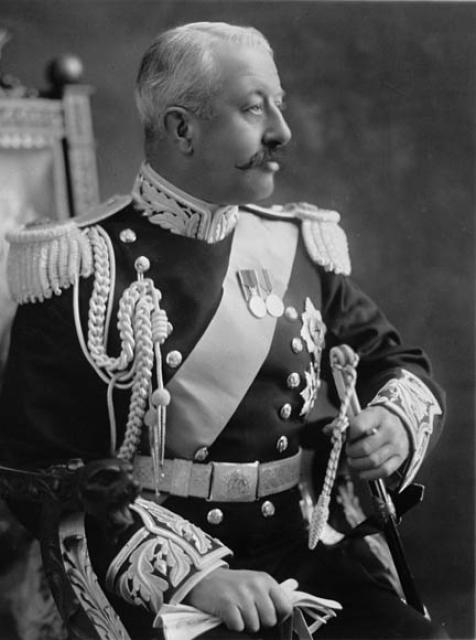
Victor Christian William Cavendish, the 9th Duke of Devonshire, was born in Marylebone, London, as the eldest son of Lord Edward Cavendish. Educated at Eton College, he matriculated at Trinity College, Cambridge, on May 30, 1887.
Marriage and Family Life
On July 30, 1892, Cavendish married Lady Evelyn FitzMaurice, the elder daughter of the Viceroy of India and Governor-General of Canada. Together, they welcomed seven children: Edward, Marquess of Hartington (born 1895); Maud Louise Emma (born 1896); Lady Dorothy (born 1900); Lady Rachel (born 1902); Charles Arthur Francis (born 1905); and Lady Anne (born 1909).
Political Career
Following the death of his father in 1891, Cavendish entered politics as the Member of Parliament for West Derbyshire. He held various parliamentary positions, including Treasurer of the Household (1900-1903), Financial Secretary to the Treasury (1903-1905), and Privy Councillor (from 1905). In 1908, he inherited the Duchy of Devonshire from his uncle and entered the House of Lords. Additionally, he served as Mayor of Eastbourne (1909-1910) and Mayor of Chesterfield (1911-1912).
Governor-General of Canada
In 1916, King George V appointed Cavendish as Governor-General of Canada, despite initial reservations from Canadian Prime Minister Robert Borden. He was sworn into office on November 11, 1916, in Halifax.
During his term, Cavendish faced social unrest and the Conscription Crisis of 1917. He also engaged with Canadian communities, visiting rural areas and attending agricultural fairs. He promoted Canada's potential in agricultural research and encouraged the development of the arts.
Post-Governorship
After leaving Canada, Cavendish returned to politics as Secretary of State for the Colonies (1922-1924), advocating for the protection of African interests. He also chaired the British Honours Committee and became an Honorary Colonel. Cavendish retired from public life and pursued agricultural interests. He passed away at Chatsworth House in Derbyshire in May 1938.