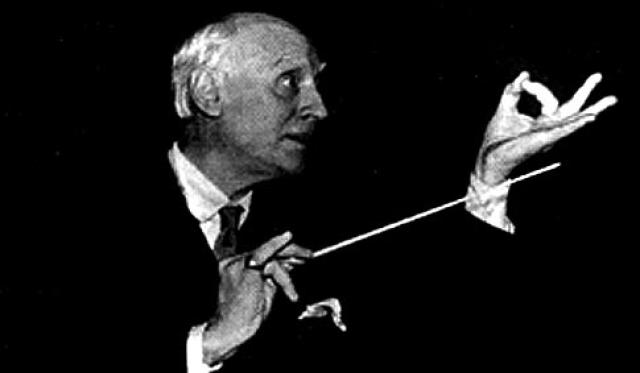
Victor de Sabata
 Italy
ItalyVictor de Sabata: A Biography
Victor de Sabata, an Italian conductor and composer, is widely regarded as one of the greatest opera conductors of the 20th century. He gained particular fame for his work with the compositions of Giuseppe Verdi, Giacomo Puccini, and Richard Wagner. While his primary focus was his compositional work, de Sabata ultimately became renowned as a conductor. His extraordinary musical abilities were praised by musicians and audiences alike, and anecdotes were even created to celebrate his exceptional talent.
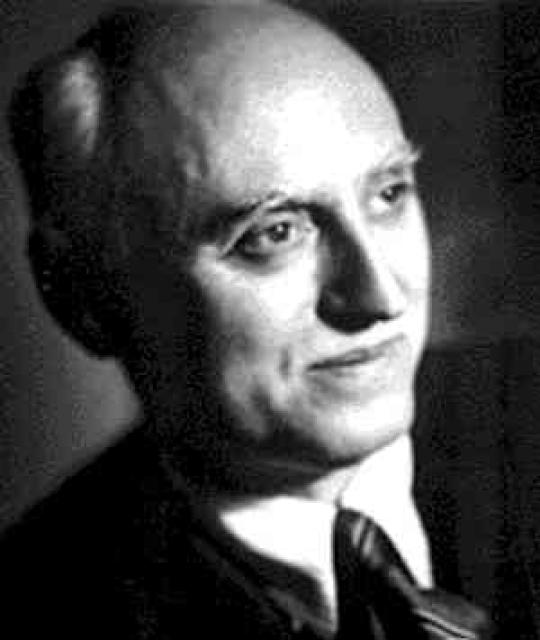
Victor was born in Trieste, which was part of Austria-Hungary at the time but is now considered part of Italy. His father, Amedeo de Sabata, was a Roman Catholic teacher of singing and choir director, while his mother was of Jewish descent and also involved in music. Victor began playing the piano at the age of four, composed his first gavotte at six, and wrote his first piano concerto with an orchestra at twelve.
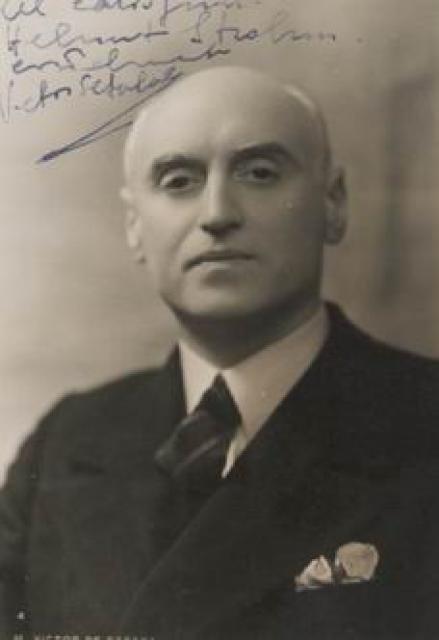
In the early 1900s, Victor's family moved to Milan, where he began his formal musical education. He studied at the Giuseppe Verdi Conservatory, excelling in piano and violin performance, composition, musical theory, and conducting. He graduated from the conservatory with honors.
In 1911, de Sabata performed in an orchestra under the guidance of Arturo Toscanini, which led him to shift his focus to conducting. His first opera premiered at La Scala on March 31, 1917, and although the reviews were mixed, it was performed frequently in the following years. However, de Sabata gradually shifted his career towards conducting and composition, while remaining a virtuoso violinist and pianist until the end of his days.
In 1918, de Sabata became a conductor at the Monte Carlo Opera, and in 1925, he had the opportunity to conduct the world premiere of Maurice Ravel's "L'enfant et les sortilèges." Ravel was astonished by de Sabata's talent, as he managed to learn the entire composition in just 12 hours of studying the score.
In 1921, Victor made his debut as a symphony orchestra conductor. Six years later, he made his debut in the United States with the Cincinnati Symphony Orchestra. In 1930, he replaced Toscanini as the chief conductor at La Scala, but his tenure was short-lived due to the poor reception of his composition "A Thousand and One Nights." Toscanini convinced de Sabata to return to La Scala, where he worked for over 20 more years. Unfortunately, Toscanini and de Sabata had a bitter falling out and did not speak to each other until the 1950s.
In the 1930s, de Sabata frequently performed in Italy and central Europe, cultivating a strong friendship with Benito Mussolini, much to Toscanini's displeasure. In 1936, he performed at the Vienna State Opera, and in 1939, he became the second non-German conductor to be granted the right to conduct at the legendary Bayreuth Festival with his production of Wagner's "Tristan und Isolde."
After World War II, de Sabata achieved international recognition and was invited to conduct in London and New York. However, Milan remained his primary place of work. In 1953, heart problems forced him into retirement, and he passed away in 1967.



