Victor Pasmore
 Great Britain
- Victor Pasmore: A Pioneer in Figurative and Abstract Art
- Figurative Period
- Transition to Abstraction
- Abstract Reliefs
- Influential Educator
- Advocate for Abstract Art
- International Recognition
- Later Years
Victor Pasmore: A Pioneer in Figurative and Abstract Art
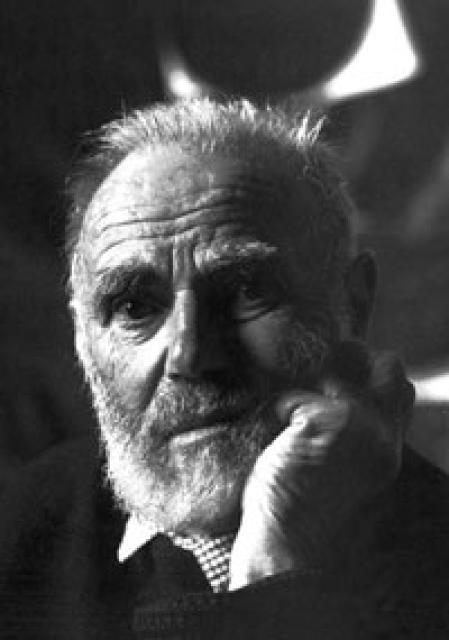
Early Life and InfluencesBorn in 1908, Victor Pasmore's artistic journey began with experiments in abstraction. However, he later returned to naturalistic painting. In 1937, he co-founded the Euston Road School with William Coldstream and Claude Rogers.
Figurative Period
Pasmore's works from the late 1930s to early 1940s portray nude women and lyrical landscapes of the Thames. These pieces showcased his mastery of naturalistic representation.
Transition to Abstraction
In the late 1940s, Pasmore embraced abstraction, developing a distinct style of geometric abstraction by the early 1950s. He also began creating abstract reliefs.
Abstract Reliefs
Pasmore's early reliefs exhibited a handcrafted quality, while his later reliefs emphasized precision and the finish of manufactured objects. His later works adopted a more organic and less rigid style.
Influential Educator
Pasmore served as Head of Painting at the Royal College of Art from 1954 to 1961. He developed a "Basic Design" course based on Bauhaus principles, which became widely influential in British art schools.
Advocate for Abstract Art
Pasmore actively promoted abstract art. He acted as a consultant for the new town of Peterlee in 1955, designing a canopy-like town center that integrated architecture with abstract relief sculptures.
International Recognition
Pasmore represented Britain at the 1961 Venice Biennale and participated in the 1959 documenta in Kassel. He served as a trustee of the Tate Gallery and donated several works to its collection.
Later Years
In his later years, Pasmore continued to produce notable works. He lectured on Turner at the Turner Society and became its Vice-President in 1975. Pasmore passed away in 1998, leaving behind a lasting legacy in both figurative and abstract art.