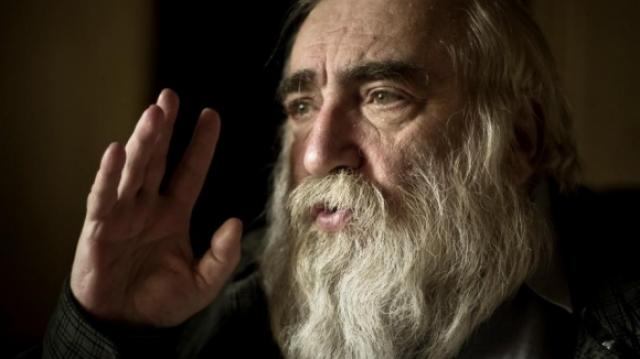
Victor Toporov
 Russia
- Victor Toporov: A Statesman of Russian Literature
- As a Translator
- Literary Critic and Polemicist
- As a Cultural Observer
- The Plight of "Four Days in May"
- Legacy
Victor Toporov: A Statesman of Russian Literature
Early Life and CareerVictor Toporov was born in the heart of Russia in a family steeped in literary traditions. From his tender years, he displayed an unquenchable thirst for knowledge and a profound passion for the written word. His early encounters with the greats of Russian literature, from Pushkin to Tolstoy, ignited within him an unyielding fire that would shape the trajectory of his life.
As a Translator
Toporov's brilliance in foreign languages, particularly German, led him to establish himself as an esteemed translator. His ability to bridge linguistic divides brought him into direct contact with a wide array of literary masterpieces, further enriching his literary landscape. His translations of German works into Russian and vice versa received critical acclaim and contributed to a broader cultural exchange between the two nations.
Literary Critic and Polemicist
Beyond his work as a translator, Toporov became renowned as a literary critic and polemicist. His essays and reviews, published in prominent literary journals, were both incisive and influential. He fearlessly challenged established literary norms and argued for the importance of authentic and innovative writing. His writings exuded a deep-seated passion for literature and a keen understanding of its transformative power.
As a Cultural Observer
Victor Toporov was not merely a scholar confined to the ivory tower. He was a man of action, deeply engaged with the social and political issues of his time. His writings extended beyond purely literary matters, tackling topics that touched upon the fabric of Russian society. He raised his voice against censorship, chauvinism, and the suppression of truth, becoming a staunch advocate for freedom of thought and expression.
The Plight of "Four Days in May"
One of the most notable episodes in Toporov's career was his unwavering stand against the cancellation of the film "Four Days in May." The German film, depicting the complex and often heartbreaking realities of war, was slated to be aired on NTV on the eve of Victory Day. However, it was abruptly replaced with a more conventional war film, sparking a heated debate.
Toporov condemned the decision to cancel the film as an act of "ethical ignorance." He argued that the film, despite its flawed historical basis, offered a vital perspective on the horrors of war and the complexities of human behavior. He saw the cancellation as a symptom of a larger cultural malaise, a reluctance to confront uncomfortable truths about the past.
Legacy
Victor Toporov's contribution to Russian literature and culture is immeasurable. His translations, criticisms, essays, and public interventions continue to shape the literary and intellectual landscape of Russia. He will be remembered as a man of integrity, an advocate for truth, and a tireless champion of the written word.



