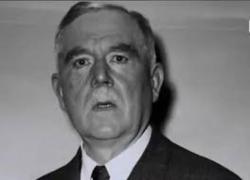
Viktor Arajs
 Latvia
- Early life and police service
- Occupation and the Arājs Kommando
- Postwar concealment and arrest
- Trial and death in prison
Viktors Arājs was a Latvian police officer who became one of the principal local collaborators in the Nazi occupation of Latvia. As commander of the unit later known as the Arājs Kommando, he led Latvian auxiliaries who took part in the persecution and mass murder of Jews and other civilians. After decades at liberty in postwar Germany, he was convicted by a Hamburg court in 1979 for his role in the killing of 13,000 Jews during the Rumbula massacre and died in prison.
Early life and police service
Arājs, also known as Viktors Bernhards Arājs, was born on January 13, 1910, in Baldone, then part of the Russian Empire. He grew up in a Latvian family; his father was a blacksmith. He studied law at the University of Latvia in Riga but did not complete his studies at that time. He served in the Latvian military and worked as a police officer in the years before the Second World War.
Occupation and the Arājs Kommando
When Nazi Germany invaded the Soviet Union and occupied Latvia in 1941, Arājs aligned himself with the German Security Police and Security Service (SD). In Riga, he organized and commanded a Latvian auxiliary unit that became known as the Arājs Kommando. It operated under German security-police authority and was used in the occupation regime’s campaign of terror.
The unit participated in the burning of Riga synagogues, arrests and shootings, and mass killing operations across Latvia. Its members took part in the murder of Jews in Riga and other communities, as well as in actions against Roma and other civilians. The unit was also involved in the Rumbula massacre, when tens of thousands of Jews from the Riga ghetto were murdered in the forest outside the city in November and December 1941. Historical estimates of the unit’s overall toll vary, but its role in the Holocaust in Latvia was extensive.
Arājs received training at the Security Police and SD leadership school in Berlin and was given the rank of police major in 1942. As German forces retreated, his unit was disbanded and its members were incorporated into other German-controlled formations. In 1945, he briefly commanded a battalion in the 15th Waffen Grenadier Division of the SS (Latvian No. 1), before being removed from command.
Postwar concealment and arrest
At the end of the war, Arājs was in the British zone of occupied Germany. British authorities held him in an internment camp, but he was released in 1949 before the planned prosecution of the Riga ghetto case went forward. He later lived under the assumed name Viktor Zeibots and worked for a printing company in Frankfurt am Main.
Investigators eventually traced him, and he was arrested in 1975. His trial opened in Hamburg in 1977 and lasted more than two years, with testimony from survivors, witnesses and former members of the unit.
Trial and death in prison
On December 21, 1979, the Hamburg State Court sentenced Arājs to life imprisonment. The court found him responsible for leading Jews from the Riga ghetto to the Rumbula killing site on December 8, 1941, where about 13,000 people were murdered. The verdict focused on his proven role in that operation.
Arājs died in prison in Kassel on January 21, 1988. His case became a landmark example of the delayed pursuit of Nazi collaborators and of the long struggle to establish accountability for crimes committed during the Holocaust in Latvia.