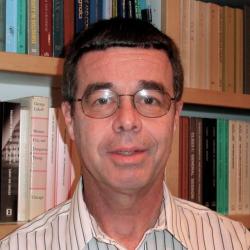
Vilem Mathesius
 Czech
CzechWilhelm Mathesius - A Czech Linguist and Founder of the Prague Linguistic Circle
Wilhelm Mathesius was a Czech linguist and the founder and first president of the Prague Linguistic Circle. He was the brother of poet and translator Bogumil Mathesius. After graduating from Charles University in Prague, Mathesius became a private lecturer, and in 1912, a professor at the university. Initially a philologist and specialist in the history of English literature, Mathesius began to take an interest in general linguistics in the early 1920s. Due to an eye illness, he had to limit the scope of his work and decided to focus on general linguistics instead of his original specialization. A significant milestone in his career was the establishment of the Prague Linguistic Circle in 1926. The manifesto of the circle, known as the "Theses," was inspired by Mathesius' ideas and co-authored by prominent Russian linguists N. S. Trubetskoy and R. O. Jakobson. Mathesius was elected as the first chairman of the circle and held this position until the end of his life.
Achievements in Linguistics
Wilhelm Mathesius is primarily known for being one of the first researchers to explore the phenomenon of "actual division" of a sentence. His interest in this issue stemmed from his overall theoretical approach, which advocated for a functional perspective on language phenomena. According to Mathesius, linguistics can be divided into two levels that correspond to two "levels of encoding": functional onomatology, which studies how reality is reflected in language, and functional syntax. In 1924, he defined a sentence as "a basic speech act through which a speaker or writer reacts to some reality, concrete or abstract. From a formal point of view, the sentence realizes the grammatical possibilities of the given language and is subjectively (from the perspective of the speaker or writer) complete." Mathesius' active involvement in synchronic contrastive linguistics can be attributed to his interest in the relationship between the function of a sentence and its "formal side," which is specific to each language.
One of Mathesius' famous works, "On the So-Called Actual Division of a Sentence," also introduces the contrast between "actual" and "formal" division. The former determines how a sentence is integrated into its context, while the latter breaks down the sentence into formal grammatical units. In order to incorporate a sentence into its context, the "starting point" needs to be identified - information known to the listener or reader and actualized in the given speech situation - as well as the "nucleus of the utterance," which refers to the new information conveyed in the sentence. In contemporary linguistics, these concepts correspond to the terms "theme" and "rheme" (often referred to as "topic" and "comment" in Anglophone tradition). Mathesius observed that in the Czech language (these observations also apply to Russian, mutatis mutandis), the actual division determines the word order: the starting point usually appears at the beginning of the sentence, while the nucleus of the utterance is placed at the end. The reverse word order, referred to as the "subjective" order, gives special emphasis to the nucleus of the utterance. During his comparative analysis of English and Czech languages, Mathesius found that English expresses actual division through voice. Thus, the English subject functions as an indicator of the starting point (theme), whereas in Slavic languages, its function is different, usually expressing the agent. Mathesius' ideas on functional language approach, study of actual division, and contrastive linguistics have had a direct impact on the development of linguistic theories in the Prague School as well as in other linguistic traditions.
Recognition and Legacy
Wilhelm Mathesius presented his views in response to representatives of other linguistic schools. He acknowledged his predecessors who had previously approached the issue of actual division, such as H. von Gablenz, whose ideas, transmitted through A. A. Shakhmatov, influenced the Russian linguistic tradition. However, Mathesius criticized the prevailing psychological approach in this field, which hindered the development of an accurate research method. In the history of linguistics, Mathesius identified two lines of thought: the "comparative-historical" and the "Humboldtian," which included the psychological direction. According to V. M. Alpatov, Mathesius evaluated these two traditions as follows: "The Humboldtians put forward promising ideas but lacked methods to develop them, whereas the Neogrammarians had a well-developed comparative-historical method but had a narrow understanding of theory." Mathesius believed that the new linguistics, as founded by the Prague Linguistic Circle, should establish a precise method that combines the concept of function from Baudouin de Courtenay with the concept of structure from Ferdinand de Saussure.
Wilhelm Mathesius' contributions to linguistics, especially in the area of actual division, functional approach, and contrastive linguistics, have had a lasting impact on the field. His work laid the foundation for further developments in the Prague School and other linguistic traditions. Despite facing challenges during his lifetime, Mathesius left behind a significant body of work that continues to be influential in the study of language.