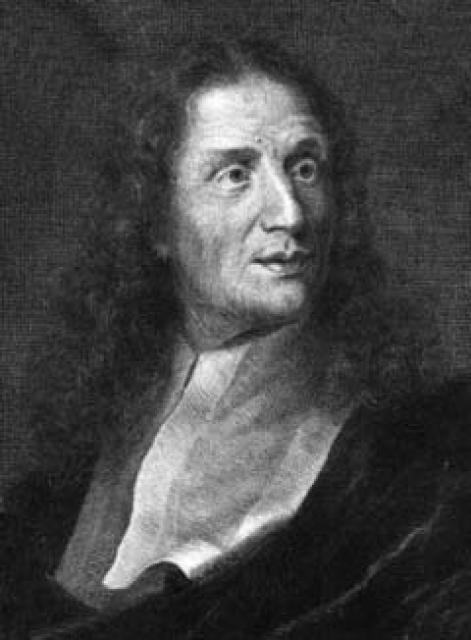
Vinchetso Viviany
 Italy
Italy- Early Life and Education
- Apprenticeship with Galileo and Torricelli
- Founding of the Accademia del Cimento
- Recognition and Honors
- Legacy
- Burial of Galileo
- Lunar Legacy
- Other Notable Achievements
Early Life and Education
Vincenzo Viviani, an Italian mathematician and physicist, was born in Florence in a humble background. His journey into the realm of science began at a Jesuit school, where he excelled in his studies. Fortune smiled upon him when he crossed paths with Evangelista Torricelli, a disciple of the renowned Galileo Galilei. Together, they embarked on numerous scientific investigations that would pave the way for Viviani's illustrious career.
Apprenticeship with Galileo and Torricelli
In 1639, Viviani became Galileo Galilei's prized pupil at the scientist's Arcetri residence. As Galileo's health declined, Viviani played an indispensable role as his assistant, providing invaluable support to the aging master during his final years. Viviani meticulously documented Galileo's teachings and insights, laying the foundation for his future work.
Founding of the Accademia del Cimento
Following the deaths of Galileo and Torricelli, Viviani continued their research, amassing a vast repository of knowledge. His reputation as Galileo's worthy successor spread far and wide, attracting the patronage of Tuscany's Grand Duke Ferdinand II. In 1657, the Accademia del Cimento, an academy dedicated to scientific experimentation, was established with Viviani as a central figure.
Recognition and Honors
Viviani's groundbreaking contributions earned him widespread recognition. He was elected a foreign member of the French Academy of Sciences in 1666 and a Fellow of the Royal Society of London in 1696. His fame extended to royal courts, with invitations from King Louis XIV and King John II Casimir of Poland.
Legacy
Viviani's scientific repertoire included seminal works on mechanics, resistance of materials, and optics. His studies on the cycloid, the Viviani curve, and the trisection of the angle demonstrated his mathematical prowess. Viviani's tireless efforts culminated in the publication of Galileo's collected works in 1655–1656, complete with a biographical sketch that immortalized the master's legacy.
Burial of Galileo
In his testament, Viviani bequeathed funds for the burial of Galileo in the Santa Croce Basilica, a wish that was finally realized in 1737. The tombs of the teacher and the student now lie side by side, a testament to their enduring bond.
Lunar Legacy
To honor Viviani's contributions to science, a lunar crater was named after him. The curve he discovered—formed by intersecting a sphere with a circular cylinder of half the radius—also bears his name.
Other Notable Achievements
Viviani's scientific pursuits extended beyond mathematics and physics. He conducted groundbreaking experiments with Torricelli to measure atmospheric pressure, collaborated with Giovanni Alfonso Borelli to estimate the speed of sound, and studied the motion of the Foucault pendulum. Viviani also delved into engineering, proposing innovative solutions for hydraulic projects.





