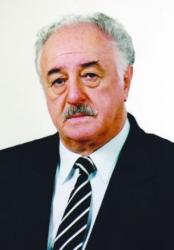
Vladimir Arkadiev
- Vasily Konstantinovich Arkadiev
- Academic and Research Contributions
- Electromagnetic Pioneer
- Innovations and Legacy
- Personal Life
Vasily Konstantinovich Arkadiev
Early Life and EducationBorn in 1887 to an actor and journalist, Vasily Konstantinovich Arkadiev faced adversity at a young age. After losing his father at age five, his mother, a librarian, raised him. His passion for science and technology blossomed during his childhood, and he amassed an impressive collection of self-made devices by the time he reached secondary school.
Guided by his French teacher, P. K. Meyer, Arkadiev gained access to the University of Moscow's laboratories, where he conducted experiments under the tutelage of renowned physicists N. A. Umov, P. N. Lebedev, and A. P. Sokolov. In 1904, he enrolled in the Faculty of Physics and Mathematics at Moscow University.
Academic and Research Contributions
Arkadiev's early research focused on electromagnetism. In 1908, he discovered the limit of the magnetization speed of iron, earning him the Natural Science Lovers Society Award. After graduating in 1908, he taught at Pedagogical Courses named after Tikhomirov and later at the University of Moscow named after Shanyavsky.
His international collaborations began in 1913 when he attended the Congress on Kinetic Theory of Matter and the Congress of German Natural Scientists. During World War I, Arkadiev established a laboratory dedicated to chemical warfare defense. After the war, he resumed his academic and research career at Moscow University.
Electromagnetic Pioneer
Arkadiev's seminal work in electromagnetism led to significant discoveries. In 1911, he investigated the dependence of magnetic properties on wavelength. In 1913, he discovered the phenomenon of selective absorption of alternating field energy in ferromagnets, known as ferromagnetic resonance, developing the theory behind it. Arkadiev's contributions extended to the introduction of the concept of magnetic viscosity.
In 1914, he collaborated with N. V. Baklin to create the first Russian impulse generator, later known as the "lightning generator." He proposed a generalized law of electromagnetic induction and laid the foundations for magnetic spectroscopy. As the head of the Academy of Sciences of the USSR's Magnetic and Semiconductor Materials Commission, he made significant advancements in the field.
Innovations and Legacy
Arkadiev's research extended to skin effect in various materials. In 1944, he discovered the equilibrium between magnetic forces and gravitational forces. Utilizing superconductivity, he demonstrated the suspension of a small permanent magnet over a superconducting lead disk in 1945, an experiment that garnered worldwide attention.
Throughout his career, Arkadiev authored over 100 scientific publications. He earned the title of Professor in 1930 and the Doctor of Physical and Mathematical Sciences degree in 1934 without a dissertation defense. His legacy lives on through the imprint he left on the scientific community and the establishment of the Maxwell Laboratory of Electromagnetism at Moscow State University.
Personal Life
Arkadiev married Alexandra Andreevna Glagoleva-Arkadyeva in 1919. He was awarded the Order of the Red Banner of Labor and several medals for his contributions to science. A postage stamp honoring Arkadiev was issued in 2000, featuring his portrait and an oscillogram of ferromagnetic resonance.