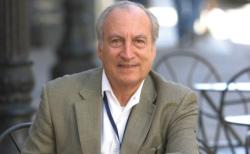
Vladimir Bogomolov
 Russia
Vladimir Bogomolov made the hidden work of wartime intelligence the center of gripping, carefully researched fiction. A Soviet and Russian writer with experience in the armed forces, he became known internationally through “Ivan,” the story adapted by Andrei Tarkovsky into Ivan’s Childhood, and through his celebrated counterintelligence novel In August of 1944, also known as The Moment of Truth. His prose often reads with the clipped precision of a report, drawing readers into the uncertainty and pressure faced by people working behind the front lines.
Early Life and War
Bogomolov was born Vladimir Osipovich Bogomolov on July 3, 1926, in Kirillovka, in the Moscow region, though some biographical references list his birth year as 1924. He grew up during a period of upheaval and came of age during World War II. He served in the Soviet armed forces, including in reconnaissance and military counterintelligence. The experience of war, and the often uncelebrated labor of those who served in it, would shape much of his later fiction.
His military background gave his writing a distinctive texture. Rather than focus only on sweeping battles, Bogomolov was drawn to observation, discipline and the small decisions that could determine whether a mission succeeded. He studied how people behaved under pressure and used operational details to make his fictional settings feel immediate and concrete.
“Ivan” and a Film Classic
Bogomolov first reached a wide readership with the novella “Ivan,” published in 1957. Its central figure is a young boy drawn into wartime reconnaissance, a child forced to live among soldiers and danger rather than in the ordinary world of childhood. The story’s emotional power comes from that collision: Ivan is capable and brave, yet his youth and vulnerability remain unmistakable.
The novella was adapted as Andrei Tarkovsky’s first feature film, Ivan’s Childhood, released in 1962. Tarkovsky expanded the story with dreamlike sequences that contrast the brutality of war with the peaceful life Ivan has lost. The film won the Golden Lion at the Venice Film Festival, bringing the story to international attention and securing a lasting place for Bogomolov’s work in world cinema. Its success also showed how his concise narrative could support a more lyrical interpretation on screen.
The Moment of Truth
Bogomolov’s best-known book is In August of 1944, often published under the alternate title The Moment of Truth. First issued in the literary journal Novy Mir in 1974, the novel follows Soviet counterintelligence officers searching for enemy agents behind the front in recently liberated Belarus. The plot unfolds through reports, interviews and operational documents as much as through conventional scenes, creating the sense that readers are piecing together a case alongside the investigators.
The novel’s close attention to procedure and military life distinguished it from many familiar war stories. Its suspense comes from methodical work: reading evidence, testing accounts and deciding whom to trust. The book became one of the best-known Soviet novels about military counterintelligence and was translated into several languages. It was also adapted for film, further widening its readership.
Legacy
Bogomolov died in Moscow on December 30, 2003. His reputation rests on a relatively small but influential body of work, especially the two stories that reached audiences across borders: “Ivan,” with its devastating portrait of a child caught in war, and The Moment of Truth, a tense study of intelligence work and moral responsibility. Both reflect his interest in the unseen human dimensions of conflict and in the painstaking choices that shape survival.