Vladimir Efroimson
- Early Life and Education
- Challenging Totalitarianism
- Arrests and Imprisonment
- Military Service and Resistance
- Unveiling Lysenko's Crimes
- Later Life and Legacy
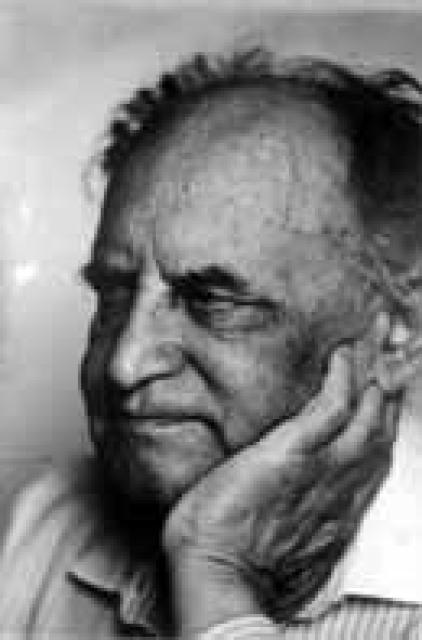
Vladimir Pavlovich Efroimson: A Soviet Geneticist and Hero of Conscience
Early Life and Education
Vladimir Pavlovich Efroimson was born on November 21, 1908, in the heart of Moscow. He spent his childhood in the historic Russia Insurance Society building, which would later become the infamous headquarters of the Cheka and NKVD.
Despite his passion for history, Efroimson pursued a degree in biology at Moscow State University in 1925. There, he became involved with the renowned geneticists N.K. Koltsov and his colleagues. Their teachings sparked his lifelong fascination with the field.
Challenging Totalitarianism
In 1929, Efroimson's academic journey took an unexpected turn. The Soviet regime launched its "cleansing" of natural sciences, targeting professors accused of "idealism." Efroimson audaciously defended S.S. Chetverikov, an esteemed geneticist, against such accusations at a tumultuous university gathering.
His outspoken defense resulted in his expulsion from the university. Undeterred, Efroimson continued his research, publishing influential papers. However, his defiance made him a target of suspicion.
Arrests and Imprisonment
In 1932, Efroimson was falsely accused of participating in a dissident philosophical society and arrested. Despite the support of renowned scientists like Koltsov, his university reinstatement was denied.
In 1937, he was arrested again, this time for his defense of Chetverikov. The Stalinist terror claimed the lives of many of his scientific colleagues, including S.G. Levit and the Nobel laureate Joseph Muller.
Despite enduring years of imprisonment and torture, Efroimson maintained his unwavering spirit. He befriended Andrei Trubetskoy, a fellow prisoner known for his refined language, through a conversation about proper speech.
Military Service and Resistance
During World War II, Efroimson served as an epidemiologist, sanitary doctor, translator, and intelligence officer, earning numerous medals. However, his ethical code compelled him to protest against the Soviet army's mistreatment of civilians in Germany. This protest became one of the pretexts for his third arrest in 1949.
Unveiling Lysenko's Crimes
In 1948, Efroimson completed a perilous investigation exposing the criminal activities of Trofim Lysenko, the pseudo-scientist who was destroying Soviet genetics. He forwarded his findings to the Central Committee, but Stalin's intervention prevented the truth from being revealed.
Later Life and Legacy
After his release in 1955, Efroimson continued to fight for scientific integrity. He published books and articles, while also working tirelessly at the Lenin Library.
In 1969, he confronted the repressive Soviet system in a lecture at a molecular biology summer school. Despite the presence of KGB agents, he fearlessly criticized the government and its corruption. His words sparked a heated debate that ultimately led to the end of the school.
Vladimir Pavlovich Efroimson's unwavering commitment to truth and human dignity made him an exceptional figure. His life stands as a testament to the indomitable spirit that can prevail even in the face of adversity. His legacy will forever inspire those who dare to challenge tyranny and defend the pursuit of knowledge.