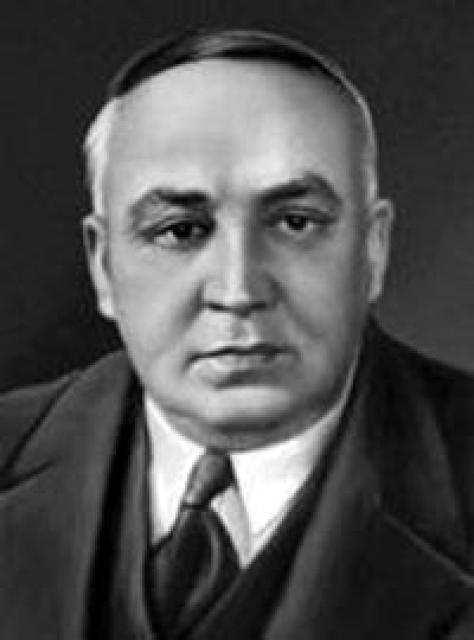
Vladimir Gardin
 Russia
- Vladimir Rostislavovich Gardin: A Cinematic Visionary
- Military Service and Early Film Career
- Founder of the Moscow State Film School
- Post-Revolutionary Career in Leningrad
- Honors and Legacy
Vladimir Rostislavovich Gardin: A Cinematic Visionary
Early Life and Acting CareerVladimir Rostislavovich Gardin, born with the surname Blagnravov, entered the world in Moscow or Tver (sources vary). He graduated from the Cadet Corps in 1894 and embarked on his acting journey as part of an amateur provincial troupe in 1898. Gardin's professional acting career spanned from 1909 to 1912, where he graced the stages of theaters in Voronezh, Tsaritsyn, and Saratov.
Military Service and Early Film Career
Military duty called Gardin into service from 1896 to 1897 and again from 1915 to 1917. However, his passion for the arts prevailed, and in 1913, he emerged as a prominent actor and director in pre-revolutionary Russian cinema. Gardin's directorial debut in 1914 marked the beginning of a prolific career, with over 33 films to his credit before 1917. Notable works include adaptations of Tolstoy's "Anna Karenina," Dostoevsky's "Kreytserova Sonata," and Tolstoy's "War and Peace."
Founder of the Moscow State Film School
In 1919, Gardin co-founded and became the first director of the Moscow State Film School (now known as VGIK). This institution played a crucial role in training aspiring filmmakers and fostering the development of Soviet cinema.
Post-Revolutionary Career in Leningrad
From 1924 onwards, Gardin continued his directing and acting work at Leningrad's film studios, including Goskino, Belgoskino, and Lenfilm. He directed numerous films that showcased his versatility, including historical dramas ("Peter the Great"), social comedies ("Anton Ivanovich Gets Angry"), and adventure films ("Secret Mission").
Honors and Legacy
Vladimir Rostislavovich Gardin was recognized as a People's Artist of the USSR in 1947, a testament to his immense contributions to Soviet cinema. His films continue to be studied and appreciated for their artistic merit and historical significance, influencing generations of filmmakers.


