Vladimir Gelfreich
- Vladimir Georgyevich Gelfreich: A Distinguished Soviet Architect
- Teaching Career
- Collaboration with Vladimir Shchuko
- Moscow Reconstruction
- Wartime Projects
- Post-War Projects
- Recognition and Legacy
Vladimir Georgyevich Gelfreich: A Distinguished Soviet Architect
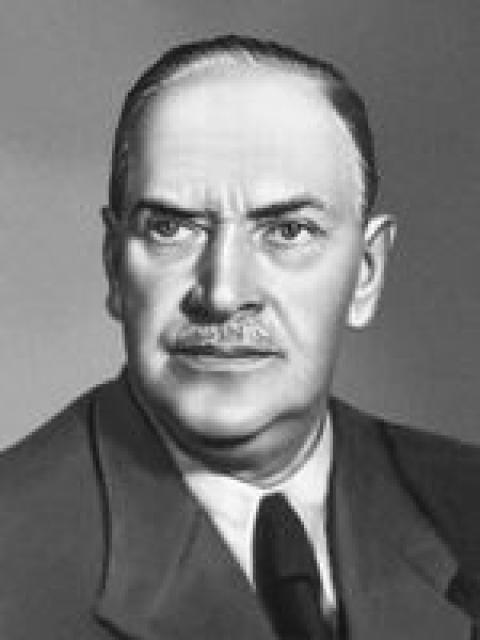
Early Life and EducationVladimir Georgyevich Gelfreich was born on March 12 (24), 1885, in Saint Petersburg. In 1906, he began studying architecture at the Imperial Academy of Arts under the guidance of Léon Benois.
Teaching Career
After graduating in 1914, Gelfreich dedicated himself to teaching architecture. He held positions at Leningrad's Vkhutemas (formerly the Academy of Arts) from 1918 to 1935 and the Moscow Higher School of Industrial Art from 1959 to 1967.
Collaboration with Vladimir Shchuko
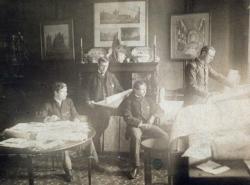
Gelfreich's career was closely intertwined with that of renowned architect Vladimir Shchuko. Together, they designed the Foreign Department of the All-Russian Agricultural and Handicraft-Industrial Exhibition in Moscow in 1923.
Moscow Reconstruction
From 1935 onwards, Gelfreich played a key role in the reconstruction of Moscow. He developed planning proposals for the southwest district and was involved in the construction of new metro stations.
Wartime Projects
During World War II, Gelfreich's architectural expertise was invaluable in the construction of the Moscow metro's third stage. He designed the vestibules and platforms for the Elektrozavodskaya and Novokuznetskaya stations.
Post-War Projects
After the war, Gelfreich continued to create architectural marvels. In 1949, he designed the platform hall for the Botanichesky Sad metro station (now Prospekt Mira) with Mikhail Minkus. In 1954, he collaborated with Minkus on a competition design for a Pantheon on Lenin Hills.
Recognition and Legacy
Gelfreich's extraordinary contributions to Soviet architecture were widely recognized. He was elected to the Academy of Architecture of the USSR in 1947 and received the title of Hero of Socialist Labor in 1965. His architectural legacy continues to inspire generations of architects to this day.