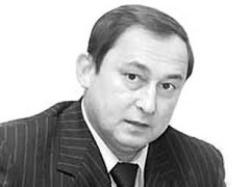
Vladimir Golitsyn
- Early Life and Family
- Education and Career in Government
- Infrastructure Development
- Financial Reforms
- Mayor of Moscow
- Urban Expansion
- Political Activism
- Resignation and Later Years
- Legacy
Early Life and Family
Vladimir Mikhailovich Golitsyn was born into an aristocratic family in Paris on July 10, 1847. His father was Prince Mikhail Fedorovich Golitsyn and his mother was Louise Trofimovna, née Countess Baranova. He had three brothers: Ivan, Alexander, and Mikhail.
Education and Career in Government
Golitsyn received his education at the Moscow University. He entered government service in 1883 as the Vice-Governor of Moscow. In 1887, he was appointed Governor of Moscow, a position he held until 1891.
Infrastructure Development
During his tenure as Governor, Golitsyn played a significant role in developing the city's infrastructure. He initiated the construction of the first power station (1888), telephone station, and numerous artesian wells. He also oversaw the creation of the Rublevsky Water Intake and wastewater treatment facilities.
Financial Reforms
Golitsyn implemented innovative financial reforms, broadening the city budget beyond property taxes to include income from municipal enterprises funded through loans.
Mayor of Moscow
In 1897, Golitsyn was elected Mayor of Moscow, succeeding K. V. Rukavishnikov. He continued the work of his predecessor, acquiring private horse-drawn tram lines and converting them into a unified network of electric tram routes. Under Golitsyn's leadership, the city's enterprises became profitable, contributing 28% of the budget's revenue by 1901.
Urban Expansion
The early 20th century witnessed a period of urban expansion under Golitsyn. New power stations were built, and railway stations were reconstructed. He also oversaw the development of early plans for a Moscow subway system, which were ultimately hindered by war and revolution.
Political Activism
Golitsyn's city council emerged as a political force, expanding beyond purely administrative matters. In 1904, Golitsyn led the opposition within the council, petitioning the tsar for constitutional reforms.
Resignation and Later Years
Following the events of October 1905, Golitsyn resigned as Mayor and became an Honorary Citizen of Moscow. He became a trustee of the A. L. Shanyavsky People's University. After the Revolution, Golitsyn worked as a bibliographer in Bogoroditsk. He was arrested several times and eventually exiled to Dмитров, where he passed away on February 29, 1932.
Legacy
Golitsyn's tenure as Mayor of Moscow was marked by significant infrastructure development, financial reforms, and political activism. His role as a subject of caricatures in Vlas Doroshevich's satirical play "The Tragedy of the Moscow Duma" highlights his prominence in the political and cultural landscape of the time. Despite being buried in the cemetery near the Kazan Church in Podlipichye, the territory was later developed, leaving no trace of his grave today.