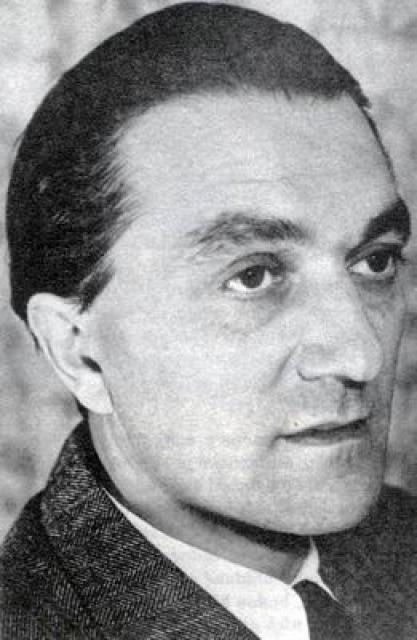
Vladimir Holan
 Czech
Czech- Prominent Czech Poet and Translator
- Surrealist Triumphs and Socialist Commitment
- Communist Party and Purge
- Post-1960s Renaissance
- Late Fame and Personal Tragedy
- Influence and Legacy
Prominent Czech Poet and Translator
Early Life and CareerBorn in Prague, Vladimír Holan spent his formative years in the countryside. From 1926 to 1933, he worked at an insurance agency before dedicating himself solely to literature and publishing. Despite his modest means, he became a respected figure in the literary world.
Surrealist Triumphs and Socialist Commitment
Holan's 1930 collection "Triumph of Death" established him as a leading figure in Czech surrealism. In the 1930s and 1940s, he became an outspoken socialist and antifascist poet. He vehemently denounced the Munich Agreement that ceded Czechoslovakia to Nazi Germany and celebrated the Soviet liberation of his country.
Communist Party and Purge
After the war, Holan joined the Communist Party but broke away in 1948. Accused of formalism, he faced harsh political retribution. His works were banned, and he lost many friends during the Stalinist purges. This period of persecution spanned until 1963.
Post-1960s Renaissance
In the 1960s, Holan's poetry experienced a renaissance. Works such as "Stories" (1963), "Night with Hamlet" (1964), and "Pain" (1965) are considered masterpieces of European postwar literature. He received notable international recognition, including the Etna-Taormina Prize in 1966 and nomination for the Nobel Prize in 1969.
Late Fame and Personal Tragedy
Despite his late resurgence, Holan's 1973 collection "Abyss of Abysses" was only published posthumously. The death of his beloved daughter in 1977 left him devastated, and he ceased writing. In 1988, his collected works were published in 10 volumes in the Czech Republic. A second edition followed in 2005.
Influence and Legacy
Holan's translations of poets like Rumi, Ronsard, and Rilke have had a profound influence on Czech literature. His own works have been widely translated into major European languages, cementing his reputation as a significant voice in 20th-century poetry.


