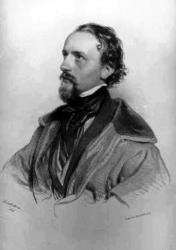
Vladimir Kirshon
- Vladimir Mikhailovich Kirshon
- Revolutionary Involvement and Civil War
- Literary Career
- Dramatic Works
- International Recognition
- Purges and Execution
- Personal Life
- Legacy
Vladimir Mikhailovich Kirshon
Early Life and EducationVladimir Mikhailovich Kirshon was born in Nalchik on March 14, 1902, into a family of legal professionals. His father, Mikhail Lvovich Kirshon, was a licensed attorney, and his mother, Olga Petrovna Zaitseva, was a medical assistant. Kirshon spent his childhood in Saint Petersburg, where the family resided.
Revolutionary Involvement and Civil War
After the February Revolution in 1917, Kirshon's mother moved with him and his sister to Kislovodsk. There, he attended the Kislovodsk Men's Gymnasium. In 1918, he joined a Red partisan unit led by N.S. Yanyshevsky, participating in battles and reaching Vladikavkaz. However, upon the capture of the city by the White Army, Kirshon's mother sent him to relatives in Rostov. He subsequently moved to Kharkiv and rejoined the Red Army.
Literary Career
During the postwar period, Kirshon served as head of educational affairs at a Communist Party school in Rostov-on-Don. He began writing agitprop plays and composing communist songs. In 1923, he graduated from the Sverdlov Communist Institute, where he had written his first play, "Our Carmagnole."
Kirshon became involved in the Leningrad Association of Proletarian Writers and the Russian Association of Proletarian Writers (RAPP). He held radical communist views and played a significant role in suppressing writers deemed to be "fellow travelers."
Dramatic Works
Kirshon's plays largely reflected the socialist realist aesthetic, glorifying Soviet society and its revolutionary transformations. His notable works include "Rails Hum" (1927), "The Miraculous Alloy" (1934), "City of Winds" (1931), and "Bread" (1931). His dramas were criticized for their simplistic political narratives and lack of artistic merit.
International Recognition
Kirshon's play "Rust" (co-written with A.V. Uspensky) was the first Soviet play to be performed on Broadway (1929). It became a popular success and was also produced in several foreign countries, including Japan, Norway, Germany, France, Latvia, Czechoslovakia, and England.
Purges and Execution
In 1937, Kirshon fell into political disfavor following the arrest of Genrikh Yagoda, former People's Commissar of Internal Affairs. Kirshon was accused of participating in a counterrevolutionary terrorist organization and was executed on July 28, 1938. He was rehabilitated posthumously in 1955.
Personal Life
Kirshon married Rita Korn in 1929, but the marriage ended in a public divorce in the early 1930s. He later lived in a common-law relationship with Nonna Belorucheva. Kirshon had two sons: Yuri (formerly Kornblum) and Vladimir (formerly Kornblum).
Legacy
Kirshon remains best known for the poem "I Asked an Ash Tree" from his play "The Great Day." Set to music by Mikael Tariverdiev, it became a popular song from the beloved Soviet film "The Irony of Fate, or Enjoy Your Bath!" Kirshon is also remembered for his role in the harassment and persecution of Mikhail Bulgakov.