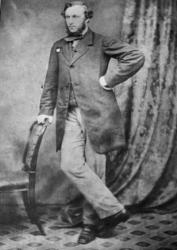
Vladimir Kotelnikov
 Russia
- Early Life and Education
- - Mother: Varvara Petrovna Kotelnikova
- Career in Radio Engineering
- World War II
- Post-War Career
- - Conducted pioneering research in planetary radiolocation
- - 1970-1975: Vice President of the Academy of Sciences of the USSR
- Awards and Honors
- - Golden Medal of the M.V. Lomonosov Academy of Sciences of the USSR
- International Awards:
- - Golden Medal of Fr. Křižík (Czechoslovak Academy of Sciences)
- - Vikram Sarabhai Medal (COSPAR)
Early Life and Education
Born:September 6, 1908, in Kazan, RussiaParents:
- Father: Alexander Petrovich Kotelnikov, a prominent mathematician and mechanic
- Mother: Varvara Petrovna Kotelnikova
Education:- 1926: Entered the Moscow Higher Technical School (MVTU) to study electrical engineering
- 1931: Graduated from the Moscow Power Engineering Institute (MEI) with a degree in electrical engineering, specializing in radio engineering
- 1931-1933: Pursued an advanced degree at MEI, where he formulated the "Sampling Theorem," later known as Kotelnikov's Theorem
Career in Radio Engineering
- 1931: Joined the Central Scientific Research Institute of Communications (CNIISt) as an engineer and later became its chief engineer
- 1933-1941: Head of Laboratory at the Institute of Radio at the Soviet Union's Ministry of Communications
- Developed innovative radio communication systems, including a transcontinental communication line connecting Moscow and Khabarovsk
World War II
- 1941: Led the evacuation of his laboratory to Ufa, where it continued research on secure communication systems
- Played a crucial role in the development of unbreakable communication systems used during the war
- Awarded two State (Stalin) Prizes (1943 and 1946) for his contributions to communication security
Post-War Career
- 1944: Returned to MEI as a professor, dean, and head of the radio engineering department
- 1947: Defended his doctoral dissertation and proposed principles of optimal signal reception (potential noise immunity theory)
- 1947-1953: Directed the design bureau at MEI, which played a major role in the Soviet Union's space program
1953-1987: Director of the Institute of Radio Engineering and Electronics (IRE)
- Oversaw the institute's establishment and growth into a leading institution in radio electronics
- Conducted pioneering research in planetary radiolocation
Later Years- 1968-1990: Professor and заведующий кафедрой at the Moscow Institute of Physics and Technology
- 1970-1975: Vice President of the Academy of Sciences of the USSR
- 1975-1988: First Vice President of the Academy of Sciences of the USSR
- 1988: Advisor to the Presidium of the Russian Academy of Sciences (RAS)
Awards and Honors
Russian Awards:- Two Hero of Socialist Labor awards
- Six Orders of Lenin
- Order of the October Revolution
- Two Orders of the Red Banner of Labor
- Order "Badge of Honor"
- Order "For Services to the Fatherland" (II Class)
- Lenin Prize
- Two State Prizes of the USSR
- Golden Medal of the A.S. Popov Academy of Sciences of the USSR (1974)
- Golden Medal of the M.V. Lomonosov Academy of Sciences of the USSR
- Golden Medal with Prize of the M.V. Keldysh Academy of Sciences of the USSR
International Awards:
- Medal of Honor (IEEE)- A.G. Bell Medal (IEEE)
- Eduard Rhein Foundation Prize (Germany)
- Golden Medal "For Services to Science and Humanity" (Czechoslovak Academy of Sciences)
- Golden Medal of Fr. Křižík (Czechoslovak Academy of Sciences)
- Gold Medal "For Services to Science" (Slovak Academy of Sciences)- Professor Jan Groszkowski Medal (Polish Society of Electrical Engineers)
- Vikram Sarabhai Medal (COSPAR)
- Jawaharlal Nehru AwardLegacy
Vladimir Aleksandrovich Kotelnikov's contributions to science and engineering are immeasurable. His "Sampling Theorem" revolutionized the field of signal processing, and his work in secure communication and planetary radiolocation laid the foundation for modern communication and space exploration technologies. He was a renowned scientist, organizer, and leader who left a lasting legacy in the field of radio electronics and beyond.