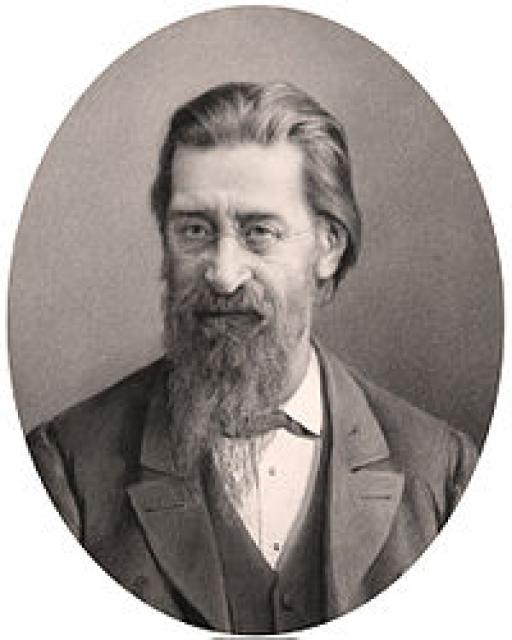
Vladimir Stoiunin
 Russia
- Early Life and Education
- Academic Pursuits and Pedagogical Career
- Pedagogical Ideals and Principles
- Views on Education and Culture
- Literary Contributions
- B. Educational Resources:
- C. Literary Studies:
- Legacy and Influence
Early Life and Education
Vladimir Yakovlevich Stoyunin, an esteemed Russian educator and public figure, was born in 1826 into a merchant family. His initial education was received at the Saint Anna Church School and the Saint Petersburg Third Gymnasium. During his gymnasium years, Stoyunin developed a keen interest in writing poetry, reflecting his vivid imagination and dreaminess.
Academic Pursuits and Pedagogical Career
Inspired by his literary aspirations, Stoyunin pursued studies at the Eastern Faculty of Saint Petersburg University, envisioning a diplomatic career in Persia or Turkey. However, he also engaged himself in the Historical-Philological (formerly Philosophical) Faculty. Financial obligations forced him to abandon his original plans and instead provide private tutoring. In 1852, he secured a teaching position at the Third Gymnasium, where he remained until 1871.
During this period, Stoyunin not only excelled as an instructor but also served as a mentor in the true sense of the word. He also taught Russian language and literature at the First Mariinsky School and the Mariinsky Institute. In 1871, he was appointed inspector of the Moscow Nikolaev Orphanage Institute. His tenure there was marked by his ability to connect with both educators and students.
Pedagogical Ideals and Principles
Stoyunin's pedagogical philosophies emphasized the importance of cultivating the individual rather than merely preparing students for specific societal roles. He believed that to foster national identity, education should be deeply rooted in the contemporary societal context. He advocated for the development of ethical values, emphasizing the significance of honesty, integrity, and selfless contributions to society.
Views on Education and Culture
Stoyunin argued that general education should transcend the boundaries of specialized disciplines and instead focus on nurturing the intellectual and moral capacities of individuals. He promoted the idea of enlightened citizens who strive for truth, justice, and beauty. He saw education as a means to prepare students to navigate the complexities of life, enabling them to choose their own paths while maintaining a strong sense of social responsibility.
Literary Contributions
Stoyunin's literary output is categorized into three main groups:A. Educational Treatises:
Stoyunin's educational writings explored various aspects of education in Russia. His "Pedagogical Works" (1892) examined the history of education and advocated for pedagogues to be attentive to contemporary societal realities. He emphasized the interplay between education and social life, arguing that schools should strive to nurture citizens who prioritize morality and the common good.
B. Educational Resources:
Stoyunin authored numerous textbooks and guides for teaching Russian language and literature. These included "Higher Course in Grammar" (1855), "On the Teaching of Russian Literature" (1864), "Guide to the Historical Study of Russian Literature" (1869), and "Russian Syntax" (1871). These works revolutionized the teaching of literature, transitioning from rote memorization to active engagement with literary texts.
C. Literary Studies:
Stoyunin published significant research and articles on Russian literature. He conducted studies on Pushkin, Kantemir, Knyazhnin, and others. He also contributed literary and theatrical reviews and articles to various journals and newspapers.
Legacy and Influence
Vladimir Stoyunin passed away in 1888. His contributions to education and literature left an enduring legacy in Russian society. His pedagogical ideals continue to inspire educators, and his literary works have enriched the understanding of Russian literature. Stoyunin's emphasis on the human-centeredness of education remains a guiding principle for generations of students and teachers alike.




