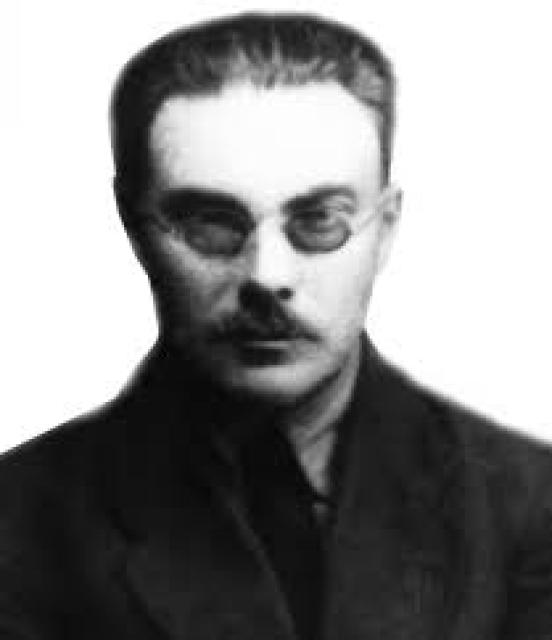
Vladimir Vladimir Petrovich Girchenko
Vladimir Petrovich Girchenko: Historian, Archivist, and Regional Specialist
Early Life and Education
Vladimir Petrovich Girchenko was born on June 29, 1878, in Verkhneudinsk (now Ulan-Ude) to a merchant family. His father was a merchant and a prominent citizen, serving as a member of the city council and as the first director of the Verkhneudinsk public bank.
Girchenko graduated from the Chita Gymnasium and entered Moscow University's history and philology department. However, before completing his studies, he was arrested for participating in a student protest and spent six months in prison before being exiled to his hometown under police supervision.
Historical and Archival Work
In 1904, Girchenko completed his university studies and began teaching history at the Chita Women's Gymnasium. From 1909 to 1917, he worked as a senior surveyor for the Verkhneudinsk land-surveying team. During this time, he also began studying the archives of Verkhneudinsk.
Girchenko was a member of the Trans-Baikal branch of the Russian Geographical Society. He organized the collection and analysis of historical documents and published numerous articles and essays. In 1923, he became the head of the Pribaikal Provincial Archive Bureau.
Cultural Contributions
Girchenko played a significant role in preserving and promoting the history and culture of the Baikal region. He organized exhibitions, established the first museum in Buryatia, and developed a program for registering historical monuments.
He also worked in the Buriat-Mongolian Scientific Research Institute of Culture, leading the history department. During this time, he traveled throughout the republic, collecting and documenting materials for archival collections.
Later Years and Legacy
In his later years, Girchenko worked in the State Historical Archive of the USSR and at the Institute of History of the USSR Academy of Sciences in Moscow, where he studied the history of Siberia. He died in Moscow in September 1953 and was buried in the Decembrist section of the Pyatnitsky Cemetery.
Girchenko's contributions to the fields of history, archival studies, and regional studies have left a lasting legacy. His work has been instrumental in preserving and interpreting the rich history of the Baikal region for future generations.


