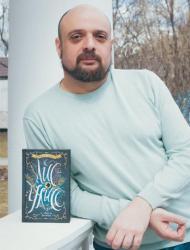
Vladimir Yatsenko
 Ukraine
- Biography of Vladimir Yatsenko
- Early Career and Literary Activities
- Writing Style and Themes
- Heroes and Ethical Ideals
- Azimut Magazine and Later Career
Biography of Vladimir Yatsenko
Vladimir Valeryevich Yatsenko, a Ukrainian and Russian writer and science fiction author, was born on February 2, 1962, in Odessa, Ukraine (then part of the USSR). He graduated from the Physics and Mathematics School No. 116 in Odessa in 1979. After receiving his diploma with honors from the Odessa Technological Institute of Refrigeration Industry (OTIHP) in 1984, Yatsenko worked as a teaching intern and entered the graduate school of OTIHP in 1986.
Early Career and Literary Activities
Yatsenko began his literary career in 1999. His first novel, "Desant v nastoyashchee" (Descent into Reality), was published in Odessa in 2000 by METTA Publishing House. From 2000 onwards, Yatsenko devoted himself entirely to literature. In 2005, his second novel, "Plenniki zimy" (Prisoners of Winter), was published in Odessa and won second place in a novel competition. Since 2006, Yatsenko has been a regular participant in online science fiction story contests. During this period (2006-2009), he focused on short stories, writing forty stories, each of which reached the finals (shortlist) of the contests. However, Yatsenko considers his two consecutive victories in the prestigious international contest "Russian Ecuador" as the pinnacle of his recognition. In 2007, his story "Istrebiteli dinazorov" (Dinosaur Fighters) won first place, followed by his victory with the story "Rasist" (Racist) in 2008.
Writing Style and Themes
Yatsenko is the author of six books, and his stories and novellas have been published in numerous anthologies and popular magazines in Russia and Ukraine. His writing style is characterized by a commitment to what is called "hard" science fiction. Classical canons serve as the foundation and structure of his works. However, all elements in his stories are so logically and interconnectedly constructed that readers experience not only emotional involvement but also a sense of personal physical presence. Critic M. Volova described this style as "logical hyperrealism."
Yatsenko believes that he writes prose, but in the enticing wrapper of science fiction assumptions. According to him, "the nature of people remains unchanged. In the times of antiquity, the Middle Ages, and the age of space travel, people love and hate, indulge in dreams and lose hope. The fantastic settings serve only to accentuate the thoughts and actions of the characters. The days of 'science fiction for science fiction' are long gone. Today, science fiction is an exceptionally flexible tool for a new perspective, allowing us to see human qualities in an unexpected light." Yatsenko consistently embodies this concept in his works.
Heroes and Ethical Ideals
Yatsenko's characters are ordinary, living people with traits that are easily recognizable in classical plots of past centuries. For example, a wife follows her terminally ill husband into lifelong quarantine in "Iznanka mira" (The Reverse Side of the World); a participant in a tragic extreme tourism accident avoids returning home to avoid meeting their parents in "Dezhurny po lageryu" (Camp Supervisor); and a merchant planning to profit from an ecological catastrophe risks his life to prevent the disaster in "Slezy sipakhi" (The Tears of the Sipahi).
His heroes are embodiments of ethical ideals that readers would like to see in themselves. Yatsenko's optimism in his characters is highlighted by the magazine "Mir Fantastiki." Each time, the author finds a way out for his heroes with an unexpected plot twist, turning yesterday's loser into a hero in an instant.
Azimut Magazine and Later Career
Since 2010, Yatsenko has been a member of the editorial board and the director of Azimut magazine. He consistently aims to provide positivity in his works, promising readers that they will only encounter positive outcomes. He believes in storytelling that showcases how to fight for resilience. According to Yatsenko, "first, things go bad for the hero, then they get worse and worse. But they don't give up, they think, act, fight, and... win. This is very important: victory against all odds."
Vladimir Yatsenko's contributions to the world of science fiction have established him as a prominent figure in Ukrainian and Russian literature, known for his logical hyperrealism and uplifting themes.