Vsevolod Frederiks
- Early Life and Education
- Research at the University of Göttingen
- Return to Russia and Work at the Optical Institute
- Role in the Spread of Relativity in Russia
- Discoveries in Liquid Crystals
- Unjust Indictment and Death
- Scientific Legacy
Early Life and Education
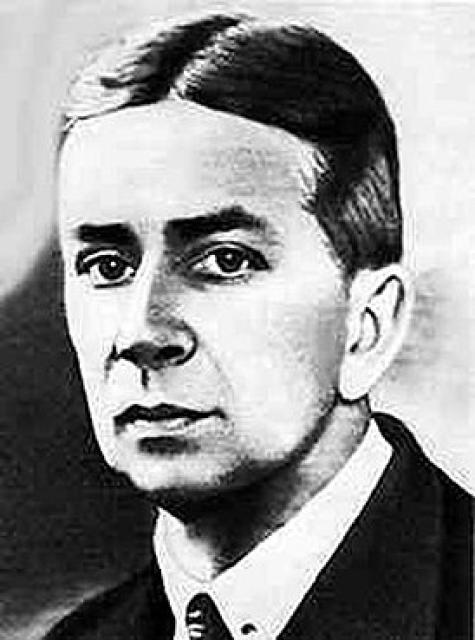
Born on April 13, 1885, in Warsaw, Vsevolod Konstantinovich Frederiks was the son of a prominent official and future governor of Nizhny Novgorod. His family moved to Tobolsk shortly after his birth, where he completed the first grade of gymnasium. In the early 1890s, they relocated to Nizhny Novgorod, where Frederiks continued his studies at the Alexandrovsky Nobleman's Institute.
After graduating from gymnasium, Frederiks chose an unconventional path despite his potential for a successful career in the government. He pursued advanced education at the University of Geneva in Switzerland and spent a semester in Paris, where he attended lectures by Paul Langevin.
Research at the University of Göttingen
In 1908-1909, under the guidance of Charles Guye, Frederiks conducted groundbreaking research on the internal friction of solids at the University of Göttingen. He remained in Göttingen for over eight years, where he collaborated with David Hilbert and immersed himself in the study of general relativity.
Return to Russia and Work at the Optical Institute
During World War I, Frederiks became a "civil prisoner" in Germany. After the war, he returned to Russia in 1918 and joined the Institute of Physics and Biophysics in Moscow. In February 1919, he moved to Petrograd and began working at the State Optical Institute.
Role in the Spread of Relativity in Russia
Together with notable scientists like Ya. I. Frenkel, A. A. Friedmann, and O. D. Khvolson, Frederiks played a pivotal role in promoting the theory of relativity in Russia. He conducted theoretical research in general relativity and unified geometric field theories, publishing six influential papers on these topics.
Discoveries in Liquid Crystals
From 1923 onwards, Frederiks headed a laboratory at the Physico-Technical Institute, where he focused on the study of liquid crystals. In 1927, he and his colleague Repyova made the groundbreaking discovery of phase transitions in liquid crystals under the influence of electric or magnetic fields (Frederiks transition). This phenomenon has since become a cornerstone of modern liquid crystal displays.
Unjust Indictment and Death
In 1936, Frederiks was falsely accused and sentenced to 10 years in prison during the "Pulkovo affair." He continued his research in the Komi Autonomous Soviet Socialist Republic while serving his sentence. In 1943, he died of pneumonia in the hospital in Gorky, where he had been transferred for specialized work. He was posthumously rehabilitated in 1956.
Scientific Legacy
Vsevolod Konstantinovich Frederiks's significant contributions to molecular physics, general relativity, and liquid crystals have left an enduring legacy in the field. His name is synonymous with the groundbreaking research that laid the foundation for modern display technologies.