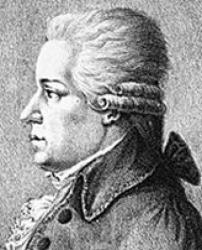
Walter Braunfels
 Germany
- Walter Braunfels: A German Musical Master
- Early Life and Influences
- A Crossroads: Law or Music
- Vienna and Munich: Musical Refinement
- Concertizing and Composing Prowess
- K?ln Conservatory: Reformation and Tribulations
- Post-War Resurgence
- Orchestral and Choral Masterpieces
Walter Braunfels: A German Musical Master
Walter Braunfels, a prominent German composer, pianist, and music educator, left an indelible mark on the musical world.
Early Life and Influences
Braunfels began his musical journey at a young age, studying piano under his maternal great-aunt, a descendent of the esteemed violinist Ludwig Spohr. He later enrolled in the Frankfurt Conservatory under the tutelage of James Kwast.
A Crossroads: Law or Music
Braunfels initially pursued studies in law and economics at the University of Munich. However, a transformative encounter with Wagner's "Tristan und Isolde" ignited a profound passion for music, leading him to embrace it professionally.
Vienna and Munich: Musical Refinement
In 1902, Braunfels sought advanced piano training with Theodor Leschetizky in Vienna. Upon returning to Munich, he dedicated himself to composition under the guidance of Felix Mottl and Ludwig Thuille.
Concertizing and Composing Prowess
Braunfels's fame as a pianist reverberated until the late 1940s. His compositional zenith emerged in the 1920s and 1930s with a series of acclaimed operas, including "Die V?gel" (1920), inspired by Aristophanes' comedy.
K?ln Conservatory: Reformation and Tribulations
In 1925, Braunfels played a pivotal role in reforming the Cologne Conservatory of Music alongside Hermann Abendroth. He served as its director until 1933. However, the advent of the Nazi regime forced him to resign due to his Jewish heritage. He spent the war years in virtual obscurity, composing in private.
Post-War Resurgence
After the war, Braunfels resumed his leadership of the Cologne Conservatory in 1947. His legacy as a composer rests on an impressive corpus of works that includes nine operas, such as "Der goldene Topf" and "Prinzessin Brambilla" (based on Hoffmann's tale).
Orchestral and Choral Masterpieces
Beyond his operas, Braunfels enriched the musical landscape with notable compositions such as "Hexentanz" for piano and orchestra, "Schottische Fantasie" for viola and orchestra, "Te Deum" for various vocal and instrumental forces, and incidental music for "Macbeth."