Walter Franz Stahlecker
 Germany
- Biography of Walter Franz Stahlecker
- Early Life and Education
- Rise in the Nazi Party
- Roles in the Nazi Regime
- Mass Killings and Death
Biography of Walter Franz Stahlecker
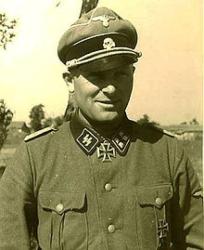
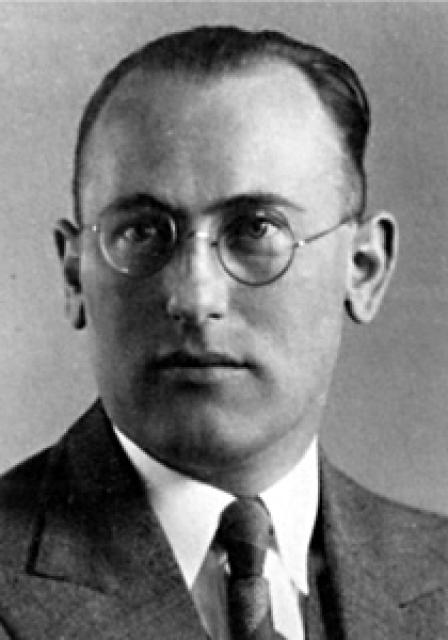
Walter Franz Stahlecker was born in a wealthy Württemberg family and grew up to become a prominent figure in the Nazi regime. He was a Brigadeführer in the SS, a Major General of Police, commander of Einsatzgruppe A, and the commander of the Security Police (Sipo) and Security Service (SD) in the Reichskommissariat Ostland.
Early Life and Education
Stahlecker was born into a privileged family and became involved with the German People's Union for Defense and Attack and the organization "Consul" between 1919 and 1920. He studied law at the University of Tübingen and obtained his doctorate in 1927. It was during this time that he began his connections with future collaborators in mass killings, such as Martin Sandberger, Erich Ehrlinger, and Oygen Staimle.
Rise in the Nazi Party
Stahlecker joined the Nazi Party (NSDAP) in 1932 and quickly rose through the ranks. Within two years, at the age of 34, he became the leader of the political police in Württemberg. In 1938, he became the Chief of the SD in the SS District of Donau (Vienna), where he held the rank of Standartenführer and served as an advisor to the minister.
Roles in the Nazi Regime
Differences in opinions with Heinrich Himmler led Stahlecker to transfer to the Reich Foreign Ministry. He then held positions as the commander of the Sipo and SD in the Protectorate of Bohemia and Moravia and Norway. In June 1941, hoping for a career in the Reichssicherheitshauptamt (Reich Main Security Office), Stahlecker took command of Einsatzgruppe A. By this time, he had gained the rank of Brigadeführer in the SS and Major General of Police.
Mass Killings and Death
Einsatzgruppe A, consisting of around one thousand members, followed Army Group A through the Baltic States to Leningrad. Stahlecker's unit proved to be highly effective in carrying out mass killings. In the fall of 1941, Stahlecker became the commander of the Security Police in the Reichskommissariat Ostland and reported to Berlin in the winter of 1941 about the murder of 249,420 Jews.
In late 1941, he ordered the establishment of the Jungfernhof concentration camp near Riga. However, on March 23, 1942, Stahlecker was killed during an encounter with partisans near Krasnogvardeysk.