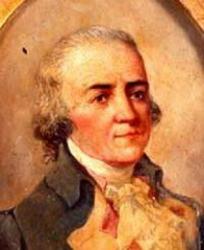
Walter Isard
 USA
USA- Early Life and Education
- Wartime Service and Transition to Regional Science
- Founding of Regional Science
- Peak and Decline of Spatial Analysis
- Contributions to Economics and Geography
- Later Career and Recognition
- Interesting Note
Early Life and Education
Walter Isard, born in Philadelphia to Quaker immigrants from Germany, graduated summa cum laude from Temple University in 1939. Continuing his studies at Harvard University, he became fascinated with location theory under the guidance of Alvin Hansen and Abbot Asher. Transferring to the University of Chicago, Isard completed his Ph.D. dissertation on production cycles and transportation development in 1942.
Wartime Service and Transition to Regional Science
During World War II, Isard worked for the National Planning Association, overseeing the supply of resources for the American defense industry. As a Quaker pacifist, he refused to serve in the military and instead completed alternative service in a mental hospital. This experience led him to study German works on location theory in depth.
After the war, Isard returned to Harvard as a part-time instructor, focusing on location theory's application to the American steel industry. He collaborated with Wassily Leontief on input-output modeling and investigated the potential of atomic energy. In 1953, he joined MIT's Department of City and Regional Planning.
Founding of Regional Science
In 1956, Isard established the Department of Regional Science at the University of Pennsylvania and founded the Regional Science Association. He published his landmark monograph, "Location and Space Economy," solidifying the new field of regional science. Subsequent publications cemented its acceptance among economists and geographers.
Peak and Decline of Spatial Analysis
The School of Spatial Analysis reached its peak in popularity in the mid-1960s. However, interest waned, and many scholars shifted their focus. In 1971, Isard moved to Cornell University, where he developed the field of "world geography" (the regional application of conflict studies).
Contributions to Economics and Geography
Isard's major works integrated models of settlement systems, transportation networks, industrial location, trade, and services. His technical-economic approach emphasized raw material and transportation costs. He used mathematical modeling as his primary method of analysis.
Later Career and Recognition
Isard's interests shifted towards conflictology and world geography later in his career. He was elected to the National Academy of Sciences in 1985.
Interesting Note
The Russian translation of Isard's "Methods of Regional Analysis" omitted a chapter on the territorial application of Keynesian economics, deeming it irrelevant to Soviet readers.