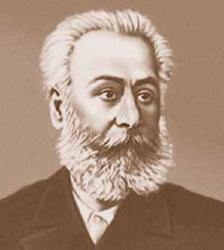
Walter Savage Landor
 Great Britain
Biography of Walter Savage Landor
Walter Savage Landor, a famous English poet, was known for his exceptional ability to write in both English and Latin. He made his debut in literature with a collection of poems titled "The poems of W. S. Landor," which showcased his extraordinary mastery of verse and his great satirical talent. Around the same time, he anonymously published a pamphlet called "Moral Epistle, respectfully dedicated to Earl Stanhope."
In 1798, Landor released his finest poem, "Gebir," which he later published in a Latin translation that was just as remarkable as the original. In 1808, Landor participated as a volunteer in the war against Napoleon in Spain. He led his own equipped squad but returned disillusioned after three months, bringing with him the material for his tragedy "Count Julian" (1812), which Swinburne considers one of the highest poetic works of the era between Milton's "Samson Agonistes" and Shelley's "Prometheus Unbound." The tragedy depicts the agony of a solitary man with a noble soul. The poem's style is filled with Miltonic grandeur and serene beauty.
In 1821, Landor permanently settled in Florence. Starting in 1824, he began publishing individual parts of his work "Imaginary Conversations," which he completed in 1846. In between, he wrote "Pericles and Aspasia," "Pentameron," "Poemata et Inscriptiones" (in Latin), and his most perfected work, "The Hellenics" (1847). He later wrote "The Last Fruit off an Old Tree," "Antony a. Octavius," "Scenes for the Study," "Dry Sticks fagoted by W. S. L.," "Heroic Idyls," and more. Landor's poetic talent places him among the great poets who glorified England at the beginning of the century. Alongside Byron and Shelley, he was a poet of freedom, but he is even closer to Keats, the author of "Hyperion." Together with Keats, Landor is a representative of neoclassicism in English poetry, advocating for a return to classical forms and simplicity.
"Imaginary Conversations" is a reworking of Lucian's dialogues, into which Landor skillfully injected contemporary content. Landor's language, whether in poetry or prose, in English or Latin, is considered exemplary. His descriptions of flowers are strikingly beautiful. A collection of Landor's works was published in 1846, followed by subsequent editions in 1876 and later.