Walter Thiel
 Germany
Biography of Walter Thiel
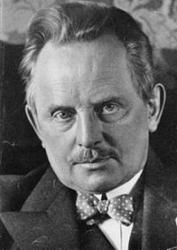
Walter Erich Oskar Thiel, a German engineer and rocketeer, played a crucial role in the development of liquid rocket engines, particularly for the A-4 rockets. He also designed the engine for the Wasserfall anti-aircraft guided missile. Walter was born in Breslau, Silesia, and was the second son of Oscar and Elsa Thiel.
In 1929, he passed his school exams with honors and went on to study chemistry at the Polytechnical College in Breslau. Walter excelled in his studies and was exempted from tuition fees in his third semester. In the winter of 1933, he passed all seven exams with top grades to become a certified chemical engineer. In 1934, he successfully defended his dissertation and received confirmation of his doctoral degree from Breslau.
Upon the recommendation of the faculty, Walter was admitted to the Research Institute of the German Army Ministry at the University of Berlin. He had previously worked on the technological application of liquid rocket projectiles, which allowed him to become one of the leading experts in his new position. In late 1934 and early 1935, he was appointed as the scientific leader at the Imperial War Ministry.
Walter participated in experiments at the Kummersdorf test site, where he met engineer-administrator Walter Dornberger and rocket and space technology designer Wernher von Braun. In the autumn of 1936, Dornberger asked Walter to join the fundamental research department of the special equipment division known as "Wa Prüf 11". Walter quickly resolved all engine-related questions and presented his work on shortening the combustion chamber and optimizing the nozzle in April 1937. He continued researching various fuel mixtures for rocket engines.
In the summer of 1940, Walter became the deputy director of the Peenemünde Test Range. That same year, he joined a group of scientists working on improving the A-4 rockets. After extensive and intense work, the A-4 project had its first successful launch from Test Stand VII on October 3, 1942. The rocket traveled 190 km along the intended trajectory, reaching a peak altitude of 85 km and a speed of 1322 m/s. Despite the project's unfinished state, German leadership immediately demanded the start of mass production.
Pressure was exerted on the research division, partly due to setbacks with the A-4 rockets after the initial successful test in October 1942. However, Walter refused to declare the rocket engine ready for mass production. In protest, he announced his resignation on August 17, 1943. Walter had plans to teach at a university, but Dornberger rejected his resignation. However, on the night of August 17-18, British Royal Air Force began bombing raids on Peenemünde as part of Operation Hydra. Walter's family perished in the bombing of the scientific and technical personnel settlement in Karlshagen. Walter, his wife Martha, their daughter Sigrid, and their son Siegfried were buried in the cemetery in Karlshagen. Martin Schilling replaced Walter in his position.
The achievements of the German engineer were not forgotten. In 1970, a lunar crater was named after him. The crater, located on the dark side of the moon, is not visible from Earth. Additionally, Walter was inducted into the Hall of Fame at the Space Museum in Alamogordo, New Mexico, USA, in 1976, as one of the pioneering figures in rocketry.