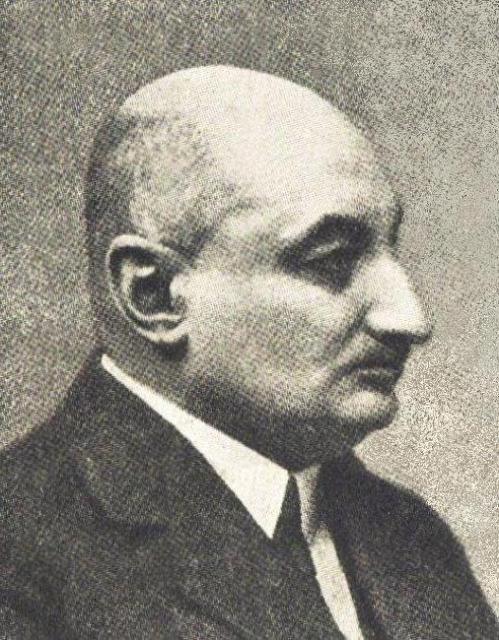
Walther Holzhausen
 Germany
- German Chess Master and Composer
- National Master and Tournament Success
- Contributions to Chess Composition
- - The clear delineation between main and preparatory plans
- Example:
- Publication and Influence
German Chess Master and Composer
Early Life and CareerHermann Plachutta, a German chess master and composer, was born in the late 19th century. He emerged as a prominent figure in the chess community during the early 20th century.
National Master and Tournament Success
In 1925, Plachutta earned the title of National Master of Chess. He achieved notable tournament results, including a third-place finish in the Hanover tournament in 1926 and the German Championship in 1927.
Contributions to Chess Composition
Expansion of Logical SchoolPlachutta was a significant contributor to the logical school of chess composition. He introduced new concepts and expanded the boundaries of the school, including:
- The introduction of the concept of "relative purity of purpose" and "maneuver"
- The distinction between themes based on the initiative of the conducting side
- The clear delineation between main and preparatory plans
Plachutta's ThemePlachutta is particularly known for the chess problem that bears his name. This theme involves a thematic false trail that leads to a critical move by the opponent. White must find a clever way to overcome this threat and execute the main plan.
Example:
1. Ch4? Bb6! and 1. Cf2? Bcb5 2. Ch4 Bb6!White, by forcing the critical move Bb6 - 1. Ce1! (~ 2. C:c3x) 1...Bb3, then covering the bishop with another bishop - 2. Cf2! Bcb5, executes the main plan - 3. Ch4! Bb6 4. Rd5#
Publication and Influence
Plachutta's chess problem was published a year earlier than a similar problem by O. Wurzburg, where the covering of thematic pieces is mutual (see Wurzburg-Plachutta Theme).


