Wang Kemin
 China
China- Early Life and Education
- Return to China and Early Career
- Banking and Finance Career
- Attempts at National Unification
- Political Instability and Northern Expedition
- Japanese Occupation and Collaboration
- Post-War and Death
Early Life and Education
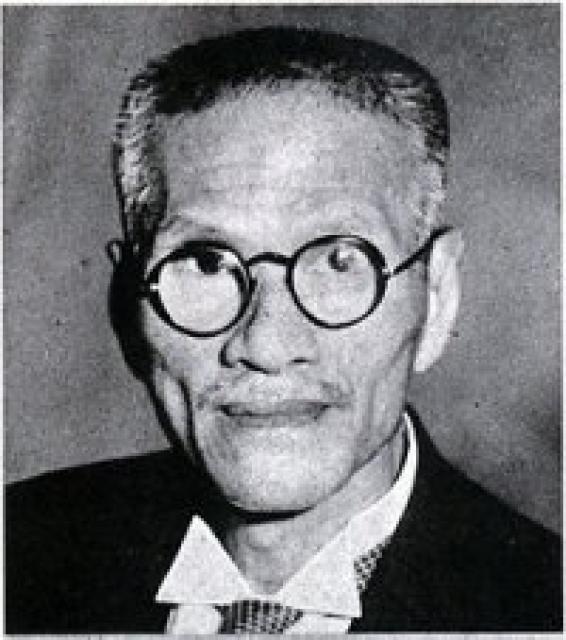
Wang Kemin, a prominent Chinese politician of the early 20th century, was born in Hangzhou, Zhejiang Province. In 1901, the Qing government dispatched him to Japan, where he studied Western economics and accounting as a nominal attaché at the Chinese embassy.
Return to China and Early Career
After returning to China in 1907, Wang Kemin served as Vice-Viceroy of Zhili, responsible for foreign affairs. In 1913, upon the establishment of the Republic of China, he was sent to France.
Banking and Finance Career
Upon his return to China, Wang Kemin played a key role in the establishment of the Bank of China under the direction of Duan Qirui. He served as its President from July 1917. Later, he served as Minister of Finance in the Beiyang Government from December 1917 to March 1918.
Attempts at National Unification
In December 1918, Wang Kemin represented the Beiyang Government in negotiations with the Nanjing Government in an effort to peacefully unify China. In 1923, he briefly served as Minister of Finance again in the government of Gao Lingwei.
Political Instability and Northern Expedition
Wang Kemin faced opposition from the Fengtian clique, which led to his brief resignation as Minister of Finance in July 1923. He later held the same post from November 1923 to October 1924 in the government of Cao Kun. After the successful conclusion of Chiang Kai-shek's Northern Expedition to unify China, an arrest warrant was issued for Wang Kemin, forcing him to flee to Dalian in the Japanese-occupied Kwantung Territory.
Japanese Occupation and Collaboration
In 1931, when Zhang Xueliang took control of Hebei Province, Wang Kemin returned to Beijing and assumed a position on the Beijing Finance Committee. In 1932, he became Mayor of Tianjin. In 1935, he became a member of the Hebei Provincial Government and joined the Hebei-Chahar Political Council.
After the outbreak of the Sino-Japanese War in 1937, the Japanese army quickly occupied northern China and began establishing puppet regimes in the occupied territories. On December 14, 1937, Wang Kemin became the head of the Japanese-created Provisional Government of the Republic of China in Beijing.
Post-War and Death
After the surrender of Japan, Wang Kemin was arrested by the Republic of China authorities and charged with treason. He committed suicide on December 26, 1945, before the conclusion of his trial.