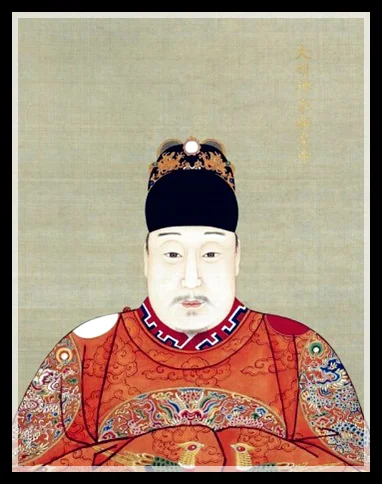
Wanli
Born Zhu Yijun on September 4, 1563, Wanli became emperor of the Ming dynasty as a child. His reign began in 1572 and lasted nearly 48 years, the longest of any Ming ruler. The early years suggested a capable and energetic court; the later decades became synonymous with bitter political deadlock. The striking shift has made him one of the dynasty’s most debated emperors.
A Young Emperor and a Powerful Mentor
Because Wanli was only nine when he took the throne, senior grand secretary Zhang Juzheng guided the government with the support of the boy’s mother, Empress Dowager Li, and palace eunuch Feng Bao. Zhang pursued administrative and fiscal reforms, including tighter review of local accounts and the broader conversion of tax obligations into silver. The administration grew more effective during this period, though the reforms were contested and their benefits depended on forceful central oversight.
Zhang died in 1582. Wanli then moved to assert his own authority, and officials investigated Zhang’s conduct and stripped his family of honors. The emperor’s relationship with the bureaucracy deteriorated. From the late 1580s he increasingly avoided regular audiences and left posts unfilled, frustrating ministers who believed daily attention from the throne was essential to governing. Court politics hardened into factional conflict, while Wanli’s withdrawal became a defining feature of his reputation.
A Reign Tested by War
The emperor’s government nevertheless remained active in major military campaigns. In 1592, Japan’s ruler Toyotomi Hideyoshi invaded Korea. Ming forces joined the Korean defense, helping push the Japanese back, but a second invasion in 1597 renewed the fighting. The costly Imjin War ended after Hideyoshi’s death in 1598. The Ming court also suppressed rebellions within the empire, including a major revolt in the southwest. These operations displayed the state’s reach, but placed heavy demands on its finances and military system.
At the same time, Wanli’s conflict with officials over the succession dragged on for years. He favored his younger son Zhu Changxun, while court convention and many ministers supported the eldest son, Zhu Changluo. The dispute strained relations between emperor and bureaucracy and contributed to a long period of stalled appointments and policy decisions. Wanli eventually accepted Zhu Changluo as heir in 1601, but the distrust did not disappear.
The Wanli Era’s Contradictions
The reign was not simply one of collapse. Ming China remained culturally productive and commercially dynamic, and its armies could still project power. Yet political paralysis, fiscal pressures, factional struggle, and challenges on the northern frontier accumulated during Wanli’s final years. The Jurchen leader Nurhaci was building a state that would later become a grave threat to the dynasty.
Wanli died in Beijing on August 18, 1620. His son succeeded him as the Taichang Emperor. The Ming would fall in 1644, more than two decades later, so Wanli should not be treated as the sole cause of its end. His long reign instead stands as a portrait of imperial contradictions: an expansive, culturally vibrant era governed by a ruler whose prolonged estrangement from his officials left the state less able to respond consistently to mounting crises.