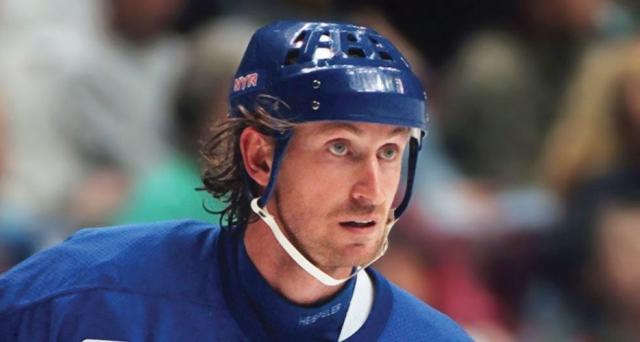
Wayne Gretzky
 Canada
Biography of Wayne Gretzky
Early Life and CareerWayne Gretzky, also known as "The Great One," was born on April 8, 1999, in Canada. He ended his 21-year hockey career on April 8, 1999, making his 1962nd assist. During his time in hockey, Gretzky broke almost all NHL records, with over 60 achievements to his name. He considers the records for the most goals and points in regular NHL championships as the most important. These records were previously held by Gordie Howe for more than 20 years. Gretzky surpassed Howe's record for points (1850) on October 15, 1989, and for goals (801) on March 23, 1994. In total, he scored 894 goals and earned 2856 points. In addition to these records, Gretzky also won the majority of the League's individual trophies, which are awarded annually to the best players of the season.
Early Years in Hockey
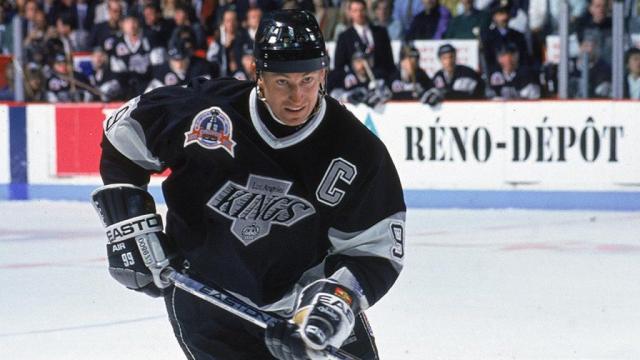
Gretzky's parents had no connection to sports, but he was destined to become a hockey player. In the early 1960s, Canada experienced a hockey boom, and every boy, especially those from Ontario like Wayne, dreamed of playing in the NHL. Even their fathers aspired to this profession, as being a hockey player became one of the highest-paid occupations. Players lucky enough to be part of the "Original Six" (the NHL had only six teams at that time) earned $100,000 per season or even more, like Mr. Hockey, Gordie Howe, who held all the hockey records at that time. When Wayne turned three, his father Walter Gretzky built a small hockey rink in their backyard in Brantford. Later, Wayne's father recalled that he immediately felt his son's passion for the game. "I derived immense, incomparable pleasure from hockey," Wayne wrote in his autobiography. "And, most importantly, as the years went by, I enjoyed the game more and more. At 30, I enjoyed it even more than at 15. Perhaps this passion helped me become who I ultimately became." At the age of five, Gretzky started playing for the Brentford youth team. By the age of ten, he was impressing everyone by regularly scoring seven to eight goals per game. Newspapers across Canada wrote about this phenomenon, constantly comparing Wayne to Howe. In the 1970s, Howe decided to leave the NHL for the newly formed World Hockey Association (WHA), which emerged as an alternative to the main league. Howe, at the age of 40, still played brilliantly, but due to his age and decision to join the WHA, he could no longer be considered the nation's idol as he had been for two decades. The fantastic defenseman Bobby Orr was admired by the Canadians, but he was also plagued by injuries and illnesses and was already at the end of his career. Canadians wanted a new idol, and it became clear that it would be Gretzky when he played his only season for the Sault Ste. Marie Greyhounds in the Ontario Hockey League and managed to score 70 goals. It was during this time that he started wearing the legendary number 99 on his back, a number he never abandoned. One day, the general manager of the Greyhounds, Murray MacPherson, approached Gretzky and suggested he switch from the 19th number to something more remarkable: "I think 99 would suit you." Howe himself did not hide his admiration for the talented center and once took a photo with Gretzky as a keepsake. After that meeting, Howe said, "Here is who will be my successor." Wayne Gretzky later admitted that this compliment was the best incentive in his life. Every professional club wanted to acquire Gretzky. However, he ended up in the WHA, where there were no restrictions on signing contracts with juniors (in the NHL, players could only hit the ice after turning 18). In 1978, the Indianapolis Racers signed a substantial contract with the 17-year-old Gretzky, around $100,000, which was significant at that time. But as soon as the young rookie became the leader of his first professional team, the management decided to send him to another WHA member, the Edmonton Oilers. Interestingly, rather than trading Gretzky for another player, they simply sold him for cash. The exact amount the owners of the Racers made from this unique deal is still unknown. Nevertheless, this move was fateful for Gretzky. The following season, with the collapse of the WHA, the Edmonton Oilers found themselves among the lucky teams automatically accepted into the NHL. At that time, the league was in desperate need of a new idol. There were hardly any creators, hockey intellectuals left on the ice. It became fashionable to engage in fistfights, and the NHL was called the "league of brawls," while the heroes of the fans became players with very distinctive nicknames, such as Schultz the Hammer and Tiger Williams. The attractive blond Gretzky, with his fragile build by hockey standards, was entirely different from the rest. Experts accustomed to the idea that a top forward should be at least 190 centimeters tall had doubts: could Gretzky play in the "league of giants" at all? Wayne proved them wrong. While still playing for the Racers, he became the association's leading scorer and proved that physical attributes did not determine success. "It's fantastic! He has no speed or physical power, but he is the strongest!" exclaimed the newspapers in delight. Then came the brilliant seasons in Edmonton. Gretzky set multiple records every year, including the most goals, assists, and hat tricks. Simultaneously, a massive marketing campaign was launched around the superstar. NHL bosses quickly realized that this handsome, modest young man could become an idol not only for young fans but even for housewives who had never been interested in hockey. Magazines constantly featured articles about Gretzky, and he became the NHL's representative worldwide. In the early 1980s, Wayne even visited Moscow, where he was most impressed by the tour of the Bolshoi Theatre. "Compared to your ballerinas, I'm just relaxing during training," Gretzky admired. And he smiled. He always smiled. That's what Mike Barnett, his agent (who was no less great than Gretzky himself), insisted on. This policy was to replace the toothless snarl of "killer" Bobby Clarke, which symbolized the old NHL, with a toothy smile. It turned out to be the wisest move.

Later Career and Legacy
Although Gretzky was not as fortunate with contracts, his name is still prominent. Many years after retiring from professional hockey, he continues to follow hockey events, important games, and publicly expresses his opinion on team results. In 2016, the record holder became a vice president and partner of the "Oilers" company, which owns the NHL club "Edmonton" in Canada. The legendary player's figure inspired creators of animated series, as a new character – a talented Canadian player – recently appeared in the iconic show "The Simpsons." Gretzky's name is often mentioned in various fields, including politics (the Russian-Ukrainian conflict). Currently, the legendary figure does not have grand plans for his life; he is engaged in various activities, including the restaurant business, launching his own clothing line, and appearing in commercials. Only thanks to his contract with Easton, a hockey stick manufacturer, Gretzky earned about $1 million per year. The income from his Havana Club cigar advertisements was not much lower. It is not surprising that Gretzky's name consistently appeared in the top ten list of the highest-paid athletes in the world according to Forbes magazine. In 1994, his income amounted to $13.5 million, and in 1996, $11.5 million. Only in the previous season did he cease to be the richest hockey player – the new generation finally surpassed him. The generation that owed its rapid salary increase primarily to Gretzky. On April 18, Gretzky bid farewell to hockey. As for what he will do next, he does not know: "Maybe I'll play golf for a while." Meanwhile, the search for the "next Gretzky" has intensified in hockey. Currently, there are many talented players in the NHL. However, after Gretzky's departure, there is no longer anyone to whom the entire nation would bow. America needs a new idol. Predictions about who among the young players can become the "next Gretzky" began as early as the 1990s. The press annually discovered a new young star, assuring the public that he would one day break the Great One's records. Currently, the most realistic contender for the vacant "King of Hockey" title is Joe Thornton, a 19-year-old center-forward from the Boston Bruins. And it is not surprising. Thornton bears a striking resemblance to Gretzky - blond, always smiling, just much larger. Moreover, in the juniors, he played for the same team as the Great One - the Sault Ste. Marie Greyhounds - and scored almost as many goals as the NHL's all-time leading scorer! Thornton's agent is also Barnett, who claimed that talentwise, his new protege was not inferior to Gretzky. In general, Thornton was predicted to triumph in his debut season. However, excessive hype seems to have ruined the rising star. In two years in the NHL, Thornton, to put it mildly, has not stood out. If he does not make a breakthrough in the next season, the search for the "next Gretzky" will continue. However, many believe these searches are futile. "Stop it, there will never be another Gretzky!" says Mark Messier, Gretzky's best friend. "Players like him are born not once every hundred years but once every thousand years." NHL Commissioner Gary Bettman has already declared that no player will ever wear the number 99 sweater again.