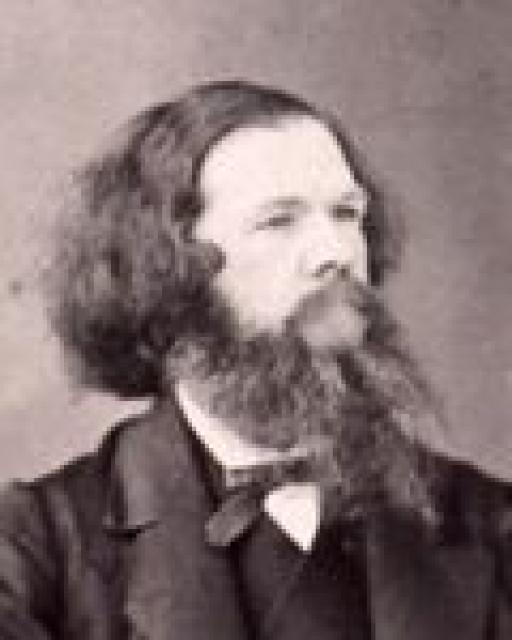
Wilhelm Bleek
 Germany
- Biography of Wilhelm Heinrich Immanuel Bleek
- Expedition and Work in South Africa
- Comparative Grammar and Research
Biography of Wilhelm Heinrich Immanuel Bleek
Wilhelm Heinrich Immanuel Bleek, a German linguist and specialist in African languages, was born on March 8, 1827, in Berlin. He was the son of theologian Friedrich Bleek. Bleek developed a fascination for African languages during his studies at the University of Bonn, where he completed his degree in 1851. His thesis focused on finding linguistic connections between the languages of North and South Africa, as it was commonly believed at the time that all African languages were related. In addition to his interest in African languages, Bleek also studied ancient Hebrew and Egyptian.
Expedition and Work in South Africa
In 1854, Bleek joined an expedition to the Niger River and Lake Chad region as a linguist. However, he fell ill during the journey and had to return to Europe. While in England, he met Bishop Natalius John William Colenso, who invited Bleek to collaborate on a dictionary of the Zulu language. Intrigued by the opportunity, Bleek traveled to South Africa, where he would spend the rest of his life. After completing his work with Colenso, Bleek moved to Cape Town in 1855 and became the curator of Sir George Grey's extensive library. When Grey was appointed Governor of New Zealand, he gifted his collection to the South African Public Library, with the condition that Bleek would remain its curator.
Comparative Grammar and Research
In 1857, Bleek had his first encounter with a member of the Bushmen people, who were often imprisoned in Cape Town. His interactions with three Bushmen prisoners on Robben Island provided him with material for the first part of his major work, "A Comparative Grammar of South African Languages," published in London in 1862. Bleek initially recorded individual words from his informants and later learned to understand connected stories. The second part of the dictionary was published in 1869.
In 1870, Bleek began working with Lucy Lloyd, his wife's sister. They expanded their research by recording Bushmen folklore, studying rituals and customs, and conducting anthropometric examinations. They also took photographs as part of their work. After Bleek's death in 1875, Lloyd and Bleek's daughter, Dorothea Bleek, continued his research. Their collaborative archive, stored at the University of Cape Town, has been recognized by UNESCO as part of the "Memory of the World" program, which preserves valuable archival sources related to human history.


