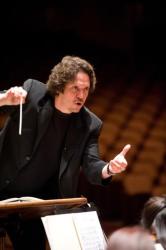
Wilhelm Furtwngler
 Germany
Wilhelm Furtwängler
Early Life and EducationWilhelm Furtwängler was born on January 25, 1886, in Berlin, Germany. From a young age, he exhibited a prodigious musical talent, studying piano, violin, and composition at the Hochschule für Musik in Berlin.
Conducting Career
Furtwängler's conducting career began in 1906, and he quickly rose to prominence for his exceptional skill and passionate interpretations. He was equally renowned for his performances of both opera and symphonic works, with Beethoven and Wagner being central to his repertoire.
Nazi Era
After the Nazis came to power in 1933, Furtwängler remained in Germany and continued to conduct. This decision sparked controversy, as some critics accused him of collaborating with the regime. However, Furtwängler maintained that he stayed in Germany to protect German musical culture.
Post-World War II
In 1947, Furtwängler was cleared of Nazi collaboration charges. He returned to the Berlin Philharmonic Orchestra in 1952, where he served as chief conductor until his death.
Legacy
Wilhelm Furtwängler was one of the most significant conductors of the 20th century. His passionate and energetic interpretations of classical music have had a lasting impact on the field. His recordings continue to be highly prized by music enthusiasts worldwide.
Death and Legacy
Furtwängler passed away on November 30, 1954, in Ebersteinburg near Baden-Baden, Germany. His death marked a great loss to the world of classical music, but his legacy lives on through his recordings and the countless musicians he inspired.