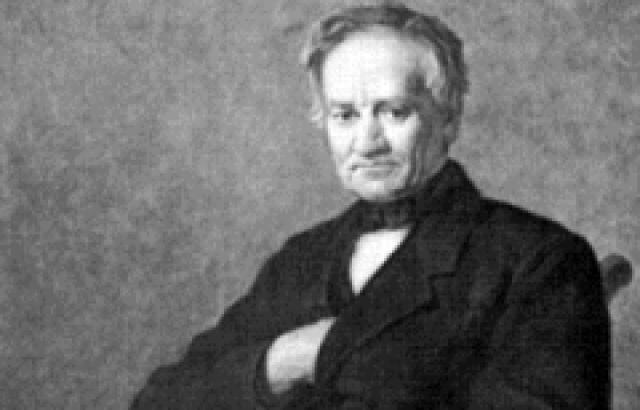
Wilhelm Peter Eduard Simon Ryuppel
 Germany
- Early Life and Education
- Expedition to the Sinai Peninsula
- Scientific Expeditions
- Frankfurt's Natural History Museum
- Recognition and Legacy
Early Life and Education
Wilhelm Eduard Rüppell was born on November 20, 1794, in Frankfurt am Main, Germany. His father was a wealthy banker, and Rüppell initially planned to pursue a career in commerce.
Expedition to the Sinai Peninsula
In 1817, Rüppell embarked on a journey to the Sinai Peninsula. This experience profoundly altered his life, as he became fascinated with zoology and botany. He abandoned his plans for a career in trade and instead enrolled in the universities of Pavia and Genoa to study these fields.
Scientific Expeditions
In 1821, Rüppell led his first scientific expedition to the Sinai Peninsula. The following year, he became the first European to reach the Gulf of Aqaba. In 1823, he collected plant specimens in Ethiopia, and in 1830, he became the first naturalist to cross the country.
Frankfurt's Natural History Museum
In 1826, some of Rüppell's specimens were featured in Philipp Jakob Cretzschmar's "Atlas of Travel in North Africa." Later, Rüppell's collections became part of the Senckenberg Museum in Frankfurt, one of Germany's largest natural history museums.
Recognition and Legacy
Rüppell's contributions to zoology and exploration were widely recognized. In 1839, he became the first foreigner to receive the Royal Geographical Society's Gold Medal. He died on December 10, 1884, in Frankfurt am Main, leaving behind a lasting legacy as a pioneering naturalist and explorer.


