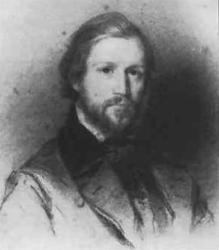
William Boyce
 Great Britain
William Boyce: English Organist and Composer
William Boyce was one of the most significant English composers of the 18th century, best known for his religious music. He was born and baptized on September 11, 1711, in London. Boyce received his early musical education as a soprano in the choir of St. Paul's Cathedral. The choir school building is now named after him. When his voice began to break due to age, Boyce left the choir and started studying the art of organ playing under the guidance of church organist and composer Maurice Greene.

Early Career
In 1734, Boyce secured his first professional position as an organist at Oxford Chapel, which was, in fact, a full-fledged church on Oxford Street named after its founder, the Earl of Oxford. He stayed there for two years and also taught in various schools near the church. Boyce then moved on to serve as an organist at St. Michael, Cornhill, and simultaneously became the court composer at the Chapel Royal. A year later, he was appointed the director of the 'Three Choirs Festival,' an annual celebration that has been held since the early 18th century. Originally, the festival involved three choirs from three cathedrals, but over time, its program expanded significantly.
Career Highlights
By the mid-18th century, Boyce's prominence grew. In 1749, he accepted an offer to become the organist at All Hallows Church, which marked the beginning of his collaboration with Drury Lane Theater. Over the next three years, he composed numerous musical works for the theater. When Maurice Greene, Boyce's teacher, passed away in 1755, the position of Master of the King's Music, a lifelong role as the director of the royal orchestra and court composer, became vacant. Boyce was offered this prestigious position, which is considered the pinnacle of his career and creative output. As the Master of the King's Music, Boyce became not only well-known but also influential in London. He primarily wrote music for special occasions, such as weddings, funerals, and holidays, in the form of odes.
Later Years and Legacy
In 1758, Boyce was appointed the chief organist at the Chapel Royal, where he had already worked as a composer. Unfortunately, he began to experience hearing loss and had to resign from his positions at St. Michael and All Hallows Churches. Although the musician had been losing his hearing since his youth, it did not hinder him until the later years of his life. Upon retirement, Boyce took on the challenging task of editing and organizing a collection of English church music written by various composers, including William Byrd and Henry Purcell. This monumental collection, titled 'Cathedral Music,' was started by Maurice Greene many years ago. Most of these works are still part of the repertoire of the Anglican Church.
William Boyce was the author of a significant number of musical compositions, with his hymns, overtures, and symphonies being the most well-known. These works combined the classical Baroque style with innovative elements and were predominantly written for the theater. Additionally, Boyce composed music for keyboard instruments and chamber orchestras. His cycle of 12 Italian-style trio sonatas published in 1747 was particularly successful.
William Boyce passed away on February 7, 1779. After his death, his popularity noticeably declined, and he was nearly forgotten in the 19th century. However, in the 1930s, more than a century and a half after his death, composer and conductor Constant Lambert rediscovered Boyce's music. Lambert edited and performed some of Boyce's works with his orchestra, reintroducing Boyce's compositions to audiences and music critics.