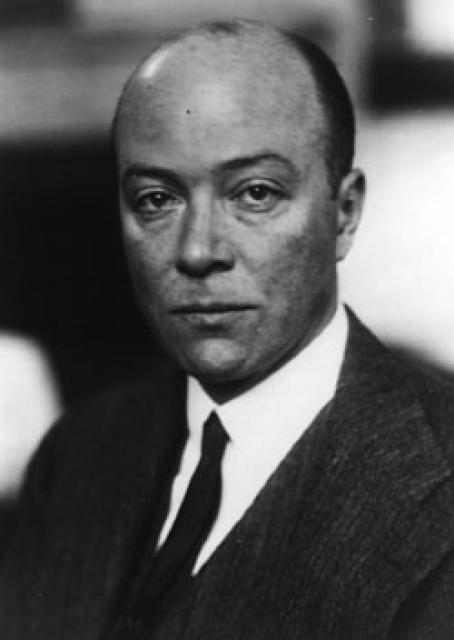
William Bullith
 USA
USA- American Diplomat and First US Ambassador to the Soviet Union
- Early Life and Career
- Personal Life and Collaboration with Sigmund Freud
- Appointment as Special Assistant to the Secretary of State
- Critical Reporting on Stalin's Regime
American Diplomat and First US Ambassador to the Soviet Union
William Bullitt was an American diplomat who served as the first ambassador of the United States to the Soviet Union. In 1919, he was sent to Moscow by President Woodrow Wilson to assess the situation of the Bolshevik government. Bullitt was the first ambassador to the Soviet Union after its official recognition by the United States in 1933.
Early Life and Career
Bullitt had a passion for journalism and spent a considerable amount of time living abroad, which allowed him to master the French and German languages even before graduating from Yale University in 1912. In 1917, President Wilson appointed him as the Deputy Secretary of State, and Bullitt was part of Wilson's advisory team at the peace conference in Paris. In March 1919, he led a secret international mission to Soviet Russia, where he had a meeting with Lenin. Two months later, Bullitt resigned from the State Department in protest against the terms of the Versailles Peace Treaty.
Personal Life and Collaboration with Sigmund Freud
In 1923, Bullitt divorced and married Louise Bryant, the widow of John Reed, the author of the book "Ten Days That Shook the World." However, their marriage ended in 1930. Bullitt collaborated with Sigmund Freud, intending to co-author a psychological portrait of President Woodrow Wilson.
Appointment as Special Assistant to the Secretary of State
In 1933, after participating in President Franklin Roosevelt's successful election campaign, Bullitt was appointed as the Special Assistant to Secretary of State Cordell Hull. In November 1933, the Soviet-American negotiations resulted in the official recognition of the USSR by the United States, and Bullitt was appointed as the first US ambassador to the Soviet Union. He played a significant role in the signing of the first trade agreement between the US and the USSR in 1935. The Spaso House was chosen as the residence for the US ambassador in Moscow, and the legendary evenings held there were described in the ball scene of Mikhail Bulgakov's novel "The Master and Margarita."
Critical Reporting on Stalin's Regime
Despite his warm personal relationships with Stalin and other Soviet leaders, Bullitt reported to Washington about the ominous aspects of the Stalinist regime. In 1936, President Roosevelt recalled Bullitt to the US, and he was later appointed as the ambassador to France, where he served until the Nazi occupation in 1940.



