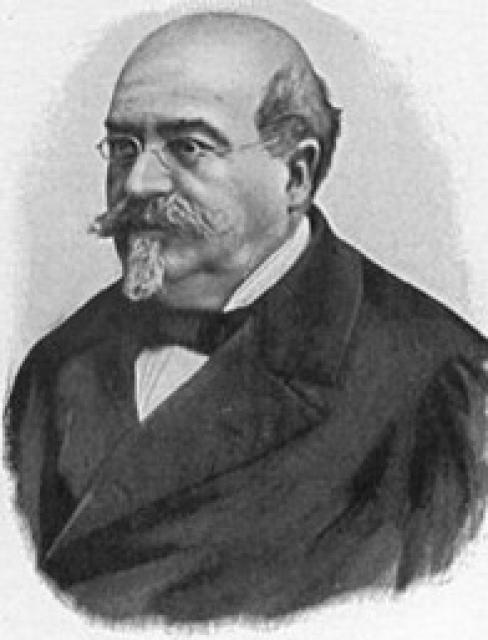
Mihail Kogalniceanu
 Romania
- Childhood and Education
- Literary and Political Beginnings
- 1848 Revolution and Exile
- Return to Politics
- Foreign Minister and Romanian Independence
- Literary and Academic Career
- Final Years and Legacy
Childhood and Education
Mihail Kogălniceanu was born on September 6, 1817, in the Principality of Moldavia. He received his early education in Iași before continuing his studies in France and Germany from 1834 to 1838.
Literary and Political Beginnings
In 1837, Kogălniceanu published "Essay on the Gypsies" in French, condemning the enslavement of Roma people. In 1840, he founded the literary journal "Dacia Literară," advocating for the development of Romanian literature rooted in national history and culture. From 1843 to 1844, he lectured on history at the Mihaileana Academy in Iași.
1848 Revolution and Exile
Kogălniceanu played a key role in the Moldavian revolutionary movement of 1848. After the movement was suppressed, he went into exile in Chernivtsi until 1849. During this time, he wrote "The Wishes of the Moldavian National Party," outlining a program for bourgeois-democratic reforms and calling for the unification of Moldavia and Wallachia.
Return to Politics
Upon his return, Kogălniceanu became active in the newspaper "Steaua Dunării," promoting the unification of the Danubian Principalities. In 1860-61, he served as Prime Minister of Moldavia. After the formation of Romania under Alexander Cuza, Kogălniceanu held various high-ranking positions.
Foreign Minister and Romanian Independence
As Minister of Foreign Affairs from 1876 to 1878, Kogălniceanu played a pivotal role in Romania's independence. He signed a convention allowing Russian troops to pass through Romania during the Russo-Turkish War of 1877-78. On May 9, 1877, he declared Romania's independence in the Chamber of Deputies.
Literary and Academic Career
Kogălniceanu published numerous historical works, archival publications, and literary works, including novels, essays, and plays. He also founded literary journals such as "Dacia Literară" and "Propășirea." From 1869, he was a member of the Romanian Academic Society and served as its President from 1887 to 1890.
Final Years and Legacy
Kogălniceanu fell ill in 1886 and died during an operation in Paris in 1891. He was buried in Iași. His name is honored in streets, squares, and educational institutions in Romania and Moldova. In Chișinău, Moldova, a street, a high school, and a museum bear his name.