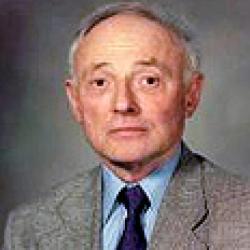
William Feller
 USA
USA- Biography of William Feller
- Early Life and Education
- Escape from Nazis and Career
- Contributions to Probability Theory
- Legacy and Death
Biography of William Feller
William 'Wilhelm' Feller, born on July 7, 1906, in Zagreb, was a Croatian-American mathematician and one of the greatest experts of the 20th century in the field of probability theory. He made significant contributions to the development and acceptance of the theory.

Early Life and Education
Feller was the son of Croatian-Austrian Catholic Ida and the renowned chemist and pharmacist Eugen Viktor Feller. His father gained fame for creating the elixir 'Elsa Fluid', which became popular in countries where prohibition was in effect due to its high alcohol content. Feller received his primary and secondary education in his hometown of Zagreb, where he also studied mathematics for two years. In 1925, he continued his education in Göttingen, Germany, where he obtained his doctoral degree a year later. His dissertation was supervised by the German mathematician Richard Courant, widely known for his book 'What is Mathematics?'.
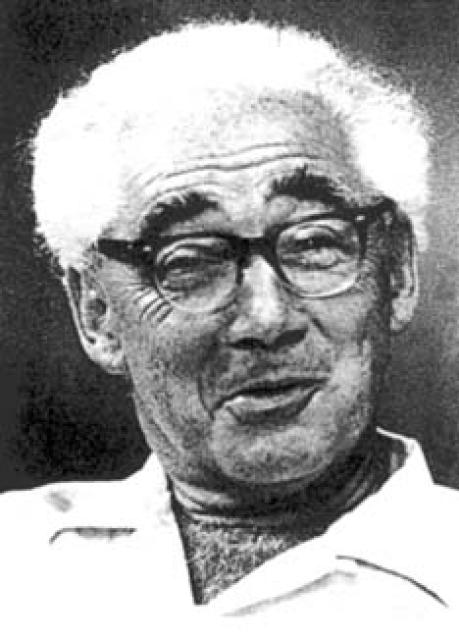
Escape from Nazis and Career
Feller held the position of associate professor at the University of Kiel starting from 1928. However, due to his refusal to swear loyalty to the Nazis and Hitler, he was forced to flee. In 1933, William arrived in Copenhagen, Denmark. He also lectured in Sweden, in Stockholm and Lund. As a refugee on Swiss soil, Feller noticed the increasing number of fascist sympathizers in the universities of Switzerland. He recounted how the mathematician Torsten Carleman suggested that Jews and foreigners should be executed. In 1939, Feller moved to the United States, where he obtained citizenship in 1944. He joined the faculty of Brown University and Cornell University as a professor and later became a professor at Princeton University in 1950.

Contributions to Probability Theory
Feller's works are represented in 104 articles and two books. He wrote on various topics, including mathematical analysis, measure theory, functional analysis, geometry, and differential equations. However, his main focus was on mathematical analysis and probability theory. Feller was one of the greatest experts of the 20th century in probability theory and is remembered for his support of the field as a branch of mathematical analysis in Sweden and the United States. In the mid-20th century, probability theory was popular in France and Russia, while according to the Swedish statistician Harald Cramér, mathematical statistics was more sought after in the United Kingdom and the United States.
Feller's two-volume work, 'An Introduction to Probability Theory and Its Applications', was described by mathematician Gian-Carlo Rota as the "most successful scientific work on probability theory". Feller encouraged his students in Sweden and the United States, facilitating the growth of research groups focused on analytical methods in probability theory. He also made significant contributions to the study of the relationship between Markov chains and differential equations. Many terms and theorems related to probability were named after the Croatian-American mathematician, including the Feller process, Kolmogorov-Feller equation, and the Lindberg-Feller theorem. William made fundamental contributions to the theory of renewal, Tauberian theorems, random walk models, diffusion processes, and the law of the iterated logarithm.
Legacy and Death
William Feller passed away on January 14, 1970, in New York City. His contributions to probability theory continue to be recognized and appreciated by mathematicians worldwide.