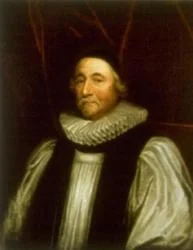
William Laud
William Laud was Archbishop of Canterbury from 1633 to 1645 and one of King Charles I’s closest religious advisers. He sought greater uniformity in worship and church organization across England, Scotland, and Ireland. Supporters saw his program as a restoration of order and tradition; critics, especially Puritans, viewed it as a threat to Protestant reform. The disputes surrounding his policies contributed to the political and religious tensions that preceded the English Civil War.
Rise in the Church of England
Laud was born in Reading in 1573, the son of a clothier. He studied at St John’s College, Oxford, where he became a fellow and developed a strong commitment to episcopal church government and formal liturgy. His career advanced through a series of church appointments, including the bishoprics of St Davids, Bath and Wells, and London.
When Charles I became king in 1625, Laud gained influence as a trusted adviser on ecclesiastical affairs. His appointment as Archbishop of Canterbury in 1633 placed him at the head of the Church of England and gave him a central role in shaping religious policy across the king’s three kingdoms.
Laudian reforms and growing opposition
Laud’s program emphasized ceremonial worship, the authority of bishops, and consistent practice among churches. He sought to position communion tables at the east end of churches and enforce uniform observance of the Book of Common Prayer. He also supported Arminian theology, which challenged some Calvinist doctrines, including strict predestination.
These policies provoked fierce opposition. Puritan critics feared that ceremonial changes moved the Church of England toward Roman Catholic practices and restricted Protestant preaching. Laud used church courts to discipline clergy and writers who opposed the reforms. In Scotland, the attempt to impose a new prayer book helped spark riots in Edinburgh in 1637 and intensified resistance to royal religious policies, contributing to the Bishops’ Wars.
Imprisonment and execution
As conflict between Charles I and Parliament escalated, Laud was impeached and imprisoned in the Tower of London in 1640. He remained there for several years while Parliament debated the charges against him. His trial began in 1644, but the proceedings did not produce a straightforward treason conviction. Parliament ultimately passed a bill authorizing his execution.
Laud was beheaded at Tower Hill on January 10, 1645. He maintained that he had served the Church and the king according to his conscience. His death took place during the First English Civil War, as Parliament and the royal forces fought for control of the state and its religious settlement.
Legacy
Laud’s legacy remains contested. His defenders remember him as a devoted churchman seeking unity and reverence in worship; his opponents view him as an authoritarian figure whose reforms deepened suspicion and resistance. His policies in Scotland, in particular, helped bring religious grievances into direct confrontation with royal power.
He became one of the most recognizable symbols of the conflicts between episcopal and Puritan visions of the English church. Laud’s career shows how arguments over worship and church authority could shape the fate of a kingdom, turning religious administration into a central issue in the struggle that led to civil war.